


Alignment in Relocation Management
What It Means and Why It Matters for Fortune 500 Mobility Programs


Fortune 500 Relocation Programs
Which Relocation Management Companies Are Best Equipped to Serve Fortune 500 Programs?
A single misstep in immigration, tax, or logistics can derail a critical hire or promotion. Fragmented vendors mean fragmented accountability. NEI brings everything together so your leaders land where they need to be, on time and fully supported.
Fortune 500 companies usually discover the difference between relocation providers after the contract is signed.
Fortune 500 Relocation Programs
The Pressures Enterprise Mobility Teams Face Today
Fortune 500 relocation programs generate constant operational pressure: policy exceptions, executive transfers, tight housing markets, tax and immigration complexity, and leadership questions about program cost and performance.

The question mobility teams eventually face is not whether the provider can coordinate relocations—it’s whether the program remains clear, organized, and predictable as these pressures accumulate.
Fortune 500 Relocation Programs
How Traditional Relocation Models Were Built
For many years, the structure Fortune 500 companies needed from relocation providers was fairly clear. Large operational teams, standardized processes, expansive supplier networks, and proprietary technology platforms to manage activity across the program. For the first generation of modern mobility programs, that structure solved a real problem. It allowed companies to move talent around the world with a level of coordination that had not previously existed.

Technology ecosystems are evolving quickly, and mobility platforms increasingly need to connect with HR systems, tax providers, immigration specialists, expense tools, and supplier technologies. This deep integration requires closer collaboration between providers and partners than traditional models were designed to support.
Corporate mobility teams now expect clearer program visibility and faster responses when conditions shift.
But Today's Environment Requires Something Different
The pressures affecting enterprise mobility programs are evolving. Technology ecosystems increasingly need to connect with HR systems, tax providers, immigration specialists, expense tools, and supplier technologies. This deeper integration requires closer collaboration than traditional operating models were originally designed to support. At the same time, housing markets shift quickly, immigration policies evolve, and mobility strategies change more frequently. Corporate mobility teams increasingly need greater visibility and faster responses when conditions change.



In other words, the next generation of Fortune 500 mobility programs requires something slightly different.
Alignment.
Fortune 500 Relocation Programs
Integration eliminates delays caused by disconnected systems and competing priorities. Your team moves faster. Your expansion timeline accelerates.
A carefully curated global partner network that collaborates closely on service standards and data liquidity.
One platform. One partner. One set of standards. Fragmentation disappears. Costs drop.
Experienced mobility advisors who work directly with corporate teams to guide decisions and can make that information intelligible/actionable.
Immigration, tax, data security, and duty of care are managed consistently across your entire program. Gaps close. Risk shrinks.
Alignment between technology systems, mobility advisors, and the service partners delivering relocation support on the ground.
This is the model NEI Global Relocation has spent years developing Rather than organizing enterprise relocation programs around the largest possible network and rigid operating frameworks, NEI has structured its model around tight coordination across the core components of mobility delivery.
Fortune 500 Relocation Programs
Independent benchmarks reflect the results.
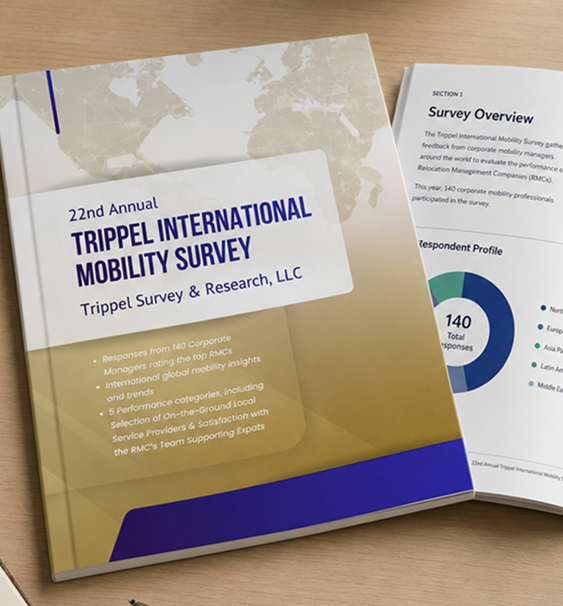
The Trippel Relocation Managers’ Survey—widely regarded as one of the most objective surveys of corporate mobility leaders—has consistently ranked NEI among the industry’s top-performing relocation providers in client satisfaction and service quality. For Fortune 500 companies evaluating relocation management partners, the distinction is becoming clearer.
Scale built the first generation of enterprise relocation programs.
Alignment will define the next.
Frequently Asked Questions
What does alignment mean in relocation management?
It means the three core parts of the program—information, decisions, and execution—stay connected. The stronger that connection is, the easier the program is to manage.
Can traditional relocation models be aligned too?
Alignment is widely understood as a goal in relocation programs. In practice, achieving it consistently is more difficult—especially in large, distributed models where coordination depends on multiple layers, systems, and stakeholders operating in sequence. Process, governance, and scale can create structure. But as programs grow, they can also introduce complexity that makes alignment harder to maintain under pressure.
What is different about NEI's integrated model for engineering alignment?
The integrated model creates alignment more structurally. Technology, advisors, and service partners operate in a tighter feedback loop, with closer visibility and coordination.
Why does this matter more now than in the past?
Because Fortune 500 mobility programs now face faster-changing conditions, more integrations, and greater pressure for clear insight into cost, service, and performance.
What should enterprise buyers ask an RMC?
They should ask not only whether the provider has scale, technology, and global reach, but also how information turns into decisions, and how those decisions reach execution across the program.