

.avif)
Why Companies Are Moving to the U.S. Sun Belt
A significant number of companies continue to drift from high-cost regions toward the Sun Belt and the appeal of cheaper homes, warmer winters and, often, lower taxes, continues to draw companies and employees or entrepreneurs. What’s behind the trend and how could it reshape corporate relocation strategies?
Heading South: Hard Numbers Show the Trend
Migration data reveals a clear pattern of households—and many companies—continuing to leave high-cost, often colder U.S. states in favor of more affordable, warmer regions. One theme stands out: the South and the Sun Belt are still gaining ground rapidly.
In 2024, California, New York, New Jersey and Massachusetts again topped the list of states people were leaving, underscoring the continued pull of lower-cost Sun Belt destinations. Certain states and their numbers clearly stand out as destinations:
- Since 2019, 25% of the 680 U.S. corporate relocations tracked by fDi Markets were companies leaving California¹ — the most of any American state, by far, according to the FinancialTimes while Texas attracted 20% of those moves and Florida pulling in about 13%.¹
- South Carolina netted about 68,000 domestic migrants between July 2023 and July 2024, making it the third-largest gain in the nation.6
- The Charlotte region of North Carolina gained 57,300 residents via migration between July 2023 and July 2024. This was a startling average of 157 new residents per day!7
These shifts highlight the real operational costs and workforce priorities driving companies to rethink headquarters strategy.
Is the Sun Belt Advantageous?
The reasons companies are heading south are not just abstract, per se. They may be measurable:
- Skilled workforce availability: Nearly 48% of relocations cited access to talent as a key factor.¹
- Lower cost of operations: In some comparisons, wages, real estate, and living expenses in Austin or Miami can be 15–20% lower than coastal hubs.3
- Regulatory and tax relief: Many companies set up in more favorable operating environments with lower taxes. For instance, Texas has no personal income tax and no traditional corporate income tax, a pro-business regulatory climate, and relatively affordable living. Florida has no personal income tax and ranks among the lowest-tax states for businesses with a relatively low corporate income tax rate.1,5
A number of well-known companies have made highly visible moves including:
- Oracle and Tesla relocated HQs to Texas in 2021.²
- Citadel, a $59B hedge fund, moved from Chicago to Florida in 2022.⁵
- Energy company Chevron shifted headquarters operations to Texas in 2024.⁵
- Other exits from California include Hewlett-Packard Enterprise, Palantir, Charles Schwab, and others.⁵
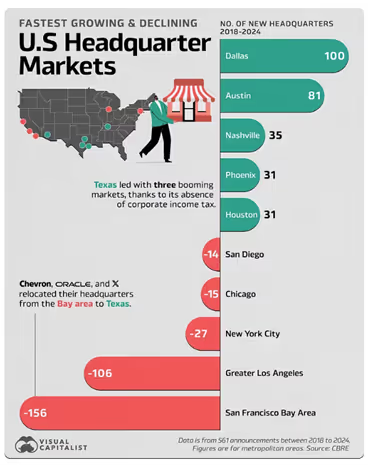
These headline shifts sit atop a larger wave: from 2018–2023, CBRE tracked 465 major HQ relocations nationwide with about half going to Texas³ and from 2018–2024, Greater Los Angeles lost 106 and the Bay Area lost 156 headquarters.⁴
Implications for HR Leaders
This movement is not about politics, it’s about strategy. For HR leaders, three themes matter most:
- Talent migration: Companies are following workforce shifts, with growing tech, finance, and logistics clusters in the Sun Belt. This means HR must anticipate where the talent pools are expanding and contracting, adjust recruiting priorities, and develop pipelines in emerging markets. Understanding local labor markets, cost-of-living trends, and skill availability can give your company a competitive edge when hiring and retaining top talent.
- Employer branding: As cities like Austin, Dallas, Miami, Nashville, etc. attract more companies, employer positioning must adapt. Job candidates will now compare potential employers not just by salary, but by location, lifestyle, weather, taxes, and future career opportunities. HR leaders will seek to ensure their company’s brand resonates in new regions, aligning messaging with the benefits of company-sponsored relocations, local culture, and community engagement initiatives. Strong employer branding can turn relocation into a recruitment advantage rather than a logistical challenge.
- Mobility policies: HR, talent management and relocation teams, must ensure relocation support is competitive and responsive to cost differences, talent demands, and regional culture. This includes everything from relocation allowances, temporary housing, and spousal support to tax guidance and local orientation programs. Thoughtful mobility policies can reduce turnover, accelerate onboarding, and enhance employee satisfaction—in many cases, turning what can be a disruptive move into a strategic opportunity.
In today’s shifting landscape, HR, talent management and relocation teams aren’t just supporting moves, they’re shaping how companies can thrive too.
Is There a Broader Migratory Impact on Corporate Relocation?
The Sun Belt migration can reshape an entire corporate relocation ecosystem such as:
- Relocation programs become a differentiator: Companies with flexible, comprehensive mobility packages attract and retain talent more effectively than those offering standard or minimal support.
- Partnerships with relocation providers are strategic: Real estate advisors, tax specialists, and move coordinators are strategic partners in ensuring smooth transitions for employees and families.
- Integrated workforce planning: Rather than treating relocation as a one-time transaction, companies should link site selection, hiring, and mobility strategies to long-term workforce growth.
Companies that proactively manage relocations and talent distribution in response to the U.S. Sun Belt growth will position themselves to capture new opportunities, strengthen employee engagement, and build competitive advantage in emerging markets.
NEI will continue to monitor this trend and its impact on the relocation space. If you would like to discuss this or any other issue in greater detail, please reach out to your NEI representative at 800.533.7353.
About NEI Global Relocation (NEI)
As a certified Women’s Business Enterprise (WBE), NEI partners with over 200 clients, including Fortune Global 100, Fortune 500, and Fortune 1000 companies—to deliver world-class global mobility and assignment management solutions. Headquartered in Omaha, Nebraska, with offices in Switzerland and Singapore, NEI helps companies transition employees smoothly across the globe.
NEI has consistently earned strong rankings in independent industry surveys, including the Trippel Nationwide Relocating Employee Survey and the Trippel Relocation Managers’ Survey, which highlight performance in both employee experience and client satisfaction. Recently, NEI has also been honored with multiple Gold Stevie® Awards, including recognition for Company of the Year – Business or Professional Services and Customer Satisfaction at the International and American Business Awards. These accolades reflect NEI’s commitment to service excellence and its leadership in the global mobility industry.
Combining consultative expertise, benchmarking, trend analysis, innovative technology, and end-to-end relocation solutions, NEI empowers organizations to make confident global mobility decisions and deliver exceptional relocation experiences.
This material has been prepared for informational purposes only and is not intended to provide, and should not be relied on for tax, legal or accounting advice. Please consult your own tax, legal and accounting advisors before engaging in any transaction
Sources:
3. Propmodo.com
7. Axios.com
Why Companies Are Moving to the U.S. Sun Belt
A significant number of companies continue to drift from high-cost regions toward the Sun Belt and the appeal of cheaper homes, warmer winters and, often, lower taxes, continues to draw companies and employees or entrepreneurs. What’s behind the trend and how could it reshape corporate relocation strategies?
Heading South: Hard Numbers Show the Trend
Migration data reveals a clear pattern of households—and many companies—continuing to leave high-cost, often colder U.S. states in favor of more affordable, warmer regions. One theme stands out: the South and the Sun Belt are still gaining ground rapidly.
In 2024, California, New York, New Jersey and Massachusetts again topped the list of states people were leaving, underscoring the continued pull of lower-cost Sun Belt destinations. Certain states and their numbers clearly stand out as destinations:
- Since 2019, 25% of the 680 U.S. corporate relocations tracked by fDi Markets were companies leaving California¹ — the most of any American state, by far, according to the FinancialTimes while Texas attracted 20% of those moves and Florida pulling in about 13%.¹
- South Carolina netted about 68,000 domestic migrants between July 2023 and July 2024, making it the third-largest gain in the nation.6
- The Charlotte region of North Carolina gained 57,300 residents via migration between July 2023 and July 2024. This was a startling average of 157 new residents per day!7
These shifts highlight the real operational costs and workforce priorities driving companies to rethink headquarters strategy.
Is the Sun Belt Advantageous?
The reasons companies are heading south are not just abstract, per se. They may be measurable:
- Skilled workforce availability: Nearly 48% of relocations cited access to talent as a key factor.¹
- Lower cost of operations: In some comparisons, wages, real estate, and living expenses in Austin or Miami can be 15–20% lower than coastal hubs.3
- Regulatory and tax relief: Many companies set up in more favorable operating environments with lower taxes. For instance, Texas has no personal income tax and no traditional corporate income tax, a pro-business regulatory climate, and relatively affordable living. Florida has no personal income tax and ranks among the lowest-tax states for businesses with a relatively low corporate income tax rate.1,5
A number of well-known companies have made highly visible moves including:
- Oracle and Tesla relocated HQs to Texas in 2021.²
- Citadel, a $59B hedge fund, moved from Chicago to Florida in 2022.⁵
- Energy company Chevron shifted headquarters operations to Texas in 2024.⁵
- Other exits from California include Hewlett-Packard Enterprise, Palantir, Charles Schwab, and others.⁵
These headline shifts sit atop a larger wave: from 2018–2023, CBRE tracked 465 major HQ relocations nationwide with about half going to Texas³ and from 2018–2024, Greater Los Angeles lost 106 and the Bay Area lost 156 headquarters.⁴
Implications for HR Leaders
This movement is not about politics, it’s about strategy. For HR leaders, three themes matter most:
- Talent migration: Companies are following workforce shifts, with growing tech, finance, and logistics clusters in the Sun Belt. This means HR must anticipate where the talent pools are expanding and contracting, adjust recruiting priorities, and develop pipelines in emerging markets. Understanding local labor markets, cost-of-living trends, and skill availability can give your company a competitive edge when hiring and retaining top talent.
- Employer branding: As cities like Austin, Dallas, Miami, Nashville, etc. attract more companies, employer positioning must adapt. Job candidates will now compare potential employers not just by salary, but by location, lifestyle, weather, taxes, and future career opportunities. HR leaders will seek to ensure their company’s brand resonates in new regions, aligning messaging with the benefits of company-sponsored relocations, local culture, and community engagement initiatives. Strong employer branding can turn relocation into a recruitment advantage rather than a logistical challenge.
- Mobility policies: HR, talent management and relocation teams, must ensure relocation support is competitive and responsive to cost differences, talent demands, and regional culture. This includes everything from relocation allowances, temporary housing, and spousal support to tax guidance and local orientation programs. Thoughtful mobility policies can reduce turnover, accelerate onboarding, and enhance employee satisfaction—in many cases, turning what can be a disruptive move into a strategic opportunity.
In today’s shifting landscape, HR, talent management and relocation teams aren’t just supporting moves, they’re shaping how companies can thrive too.
Is There a Broader Migratory Impact on Corporate Relocation?
The Sun Belt migration can reshape an entire corporate relocation ecosystem such as:
- Relocation programs become a differentiator: Companies with flexible, comprehensive mobility packages attract and retain talent more effectively than those offering standard or minimal support.
- Partnerships with relocation providers are strategic: Real estate advisors, tax specialists, and move coordinators are strategic partners in ensuring smooth transitions for employees and families.
- Integrated workforce planning: Rather than treating relocation as a one-time transaction, companies should link site selection, hiring, and mobility strategies to long-term workforce growth.
Companies that proactively manage relocations and talent distribution in response to the U.S. Sun Belt growth will position themselves to capture new opportunities, strengthen employee engagement, and build competitive advantage in emerging markets.
NEI will continue to monitor this trend and its impact on the relocation space. If you would like to discuss this or any other issue in greater detail, please reach out to your NEI representative at 800.533.7353.
About NEI Global Relocation (NEI)
As a certified Women’s Business Enterprise (WBE), NEI partners with over 200 clients, including Fortune Global 100, Fortune 500, and Fortune 1000 companies—to deliver world-class global mobility and assignment management solutions. Headquartered in Omaha, Nebraska, with offices in Switzerland and Singapore, NEI helps companies transition employees smoothly across the globe.
NEI has consistently earned strong rankings in independent industry surveys, including the Trippel Nationwide Relocating Employee Survey and the Trippel Relocation Managers’ Survey, which highlight performance in both employee experience and client satisfaction. Recently, NEI has also been honored with multiple Gold Stevie® Awards, including recognition for Company of the Year – Business or Professional Services and Customer Satisfaction at the International and American Business Awards. These accolades reflect NEI’s commitment to service excellence and its leadership in the global mobility industry.
Combining consultative expertise, benchmarking, trend analysis, innovative technology, and end-to-end relocation solutions, NEI empowers organizations to make confident global mobility decisions and deliver exceptional relocation experiences.
This material has been prepared for informational purposes only and is not intended to provide, and should not be relied on for tax, legal or accounting advice. Please consult your own tax, legal and accounting advisors before engaging in any transaction
Sources:
3. Propmodo.com
7. Axios.com
Why Companies Are Moving to the U.S. Sun Belt
A significant number of companies continue to drift from high-cost regions toward the Sun Belt and the appeal of cheaper homes, warmer winters and, often, lower taxes, continues to draw companies and employees or entrepreneurs. What’s behind the trend and how could it reshape corporate relocation strategies?
Heading South: Hard Numbers Show the Trend
Migration data reveals a clear pattern of households—and many companies—continuing to leave high-cost, often colder U.S. states in favor of more affordable, warmer regions. One theme stands out: the South and the Sun Belt are still gaining ground rapidly.
In 2024, California, New York, New Jersey and Massachusetts again topped the list of states people were leaving, underscoring the continued pull of lower-cost Sun Belt destinations. Certain states and their numbers clearly stand out as destinations:
- Since 2019, 25% of the 680 U.S. corporate relocations tracked by fDi Markets were companies leaving California¹ — the most of any American state, by far, according to the FinancialTimes while Texas attracted 20% of those moves and Florida pulling in about 13%.¹
- South Carolina netted about 68,000 domestic migrants between July 2023 and July 2024, making it the third-largest gain in the nation.6
- The Charlotte region of North Carolina gained 57,300 residents via migration between July 2023 and July 2024. This was a startling average of 157 new residents per day!7
These shifts highlight the real operational costs and workforce priorities driving companies to rethink headquarters strategy.
Is the Sun Belt Advantageous?
The reasons companies are heading south are not just abstract, per se. They may be measurable:
- Skilled workforce availability: Nearly 48% of relocations cited access to talent as a key factor.¹
- Lower cost of operations: In some comparisons, wages, real estate, and living expenses in Austin or Miami can be 15–20% lower than coastal hubs.3
- Regulatory and tax relief: Many companies set up in more favorable operating environments with lower taxes. For instance, Texas has no personal income tax and no traditional corporate income tax, a pro-business regulatory climate, and relatively affordable living. Florida has no personal income tax and ranks among the lowest-tax states for businesses with a relatively low corporate income tax rate.1,5
A number of well-known companies have made highly visible moves including:
- Oracle and Tesla relocated HQs to Texas in 2021.²
- Citadel, a $59B hedge fund, moved from Chicago to Florida in 2022.⁵
- Energy company Chevron shifted headquarters operations to Texas in 2024.⁵
- Other exits from California include Hewlett-Packard Enterprise, Palantir, Charles Schwab, and others.⁵
These headline shifts sit atop a larger wave: from 2018–2023, CBRE tracked 465 major HQ relocations nationwide with about half going to Texas³ and from 2018–2024, Greater Los Angeles lost 106 and the Bay Area lost 156 headquarters.⁴
Implications for HR Leaders
This movement is not about politics, it’s about strategy. For HR leaders, three themes matter most:
- Talent migration: Companies are following workforce shifts, with growing tech, finance, and logistics clusters in the Sun Belt. This means HR must anticipate where the talent pools are expanding and contracting, adjust recruiting priorities, and develop pipelines in emerging markets. Understanding local labor markets, cost-of-living trends, and skill availability can give your company a competitive edge when hiring and retaining top talent.
- Employer branding: As cities like Austin, Dallas, Miami, Nashville, etc. attract more companies, employer positioning must adapt. Job candidates will now compare potential employers not just by salary, but by location, lifestyle, weather, taxes, and future career opportunities. HR leaders will seek to ensure their company’s brand resonates in new regions, aligning messaging with the benefits of company-sponsored relocations, local culture, and community engagement initiatives. Strong employer branding can turn relocation into a recruitment advantage rather than a logistical challenge.
- Mobility policies: HR, talent management and relocation teams, must ensure relocation support is competitive and responsive to cost differences, talent demands, and regional culture. This includes everything from relocation allowances, temporary housing, and spousal support to tax guidance and local orientation programs. Thoughtful mobility policies can reduce turnover, accelerate onboarding, and enhance employee satisfaction—in many cases, turning what can be a disruptive move into a strategic opportunity.
In today’s shifting landscape, HR, talent management and relocation teams aren’t just supporting moves, they’re shaping how companies can thrive too.
Is There a Broader Migratory Impact on Corporate Relocation?
The Sun Belt migration can reshape an entire corporate relocation ecosystem such as:
- Relocation programs become a differentiator: Companies with flexible, comprehensive mobility packages attract and retain talent more effectively than those offering standard or minimal support.
- Partnerships with relocation providers are strategic: Real estate advisors, tax specialists, and move coordinators are strategic partners in ensuring smooth transitions for employees and families.
- Integrated workforce planning: Rather than treating relocation as a one-time transaction, companies should link site selection, hiring, and mobility strategies to long-term workforce growth.
Companies that proactively manage relocations and talent distribution in response to the U.S. Sun Belt growth will position themselves to capture new opportunities, strengthen employee engagement, and build competitive advantage in emerging markets.
NEI will continue to monitor this trend and its impact on the relocation space. If you would like to discuss this or any other issue in greater detail, please reach out to your NEI representative at 800.533.7353.
About NEI Global Relocation (NEI)
As a certified Women’s Business Enterprise (WBE), NEI partners with over 200 clients, including Fortune Global 100, Fortune 500, and Fortune 1000 companies—to deliver world-class global mobility and assignment management solutions. Headquartered in Omaha, Nebraska, with offices in Switzerland and Singapore, NEI helps companies transition employees smoothly across the globe.
NEI has consistently earned strong rankings in independent industry surveys, including the Trippel Nationwide Relocating Employee Survey and the Trippel Relocation Managers’ Survey, which highlight performance in both employee experience and client satisfaction. Recently, NEI has also been honored with multiple Gold Stevie® Awards, including recognition for Company of the Year – Business or Professional Services and Customer Satisfaction at the International and American Business Awards. These accolades reflect NEI’s commitment to service excellence and its leadership in the global mobility industry.
Combining consultative expertise, benchmarking, trend analysis, innovative technology, and end-to-end relocation solutions, NEI empowers organizations to make confident global mobility decisions and deliver exceptional relocation experiences.
This material has been prepared for informational purposes only and is not intended to provide, and should not be relied on for tax, legal or accounting advice. Please consult your own tax, legal and accounting advisors before engaging in any transaction
Sources:
3. Propmodo.com
7. Axios.com