

Life Sciences
Life Sciences workforce mobility sits at the intersection of specialized talent, research, product development, and growth. As organizations expand across research hubs, clinical networks, and global markets, relocation programs must support movement without losing sight of the precision the industry demands.
Life Sciences Relocation Programs
Why Relocation Carries More Weight in Life Sciences
In many research environments, work cannot proceed unless a qualified scientist is physically present.
Laboratories commonly restrict technicians from conducting hazardous procedures alone. Federal safety standards and institutional policies often require a PhD-level researcher or Principal Investigator to oversee certain experiments involving hazardous chemicals, biohazards, or complex biological systems.
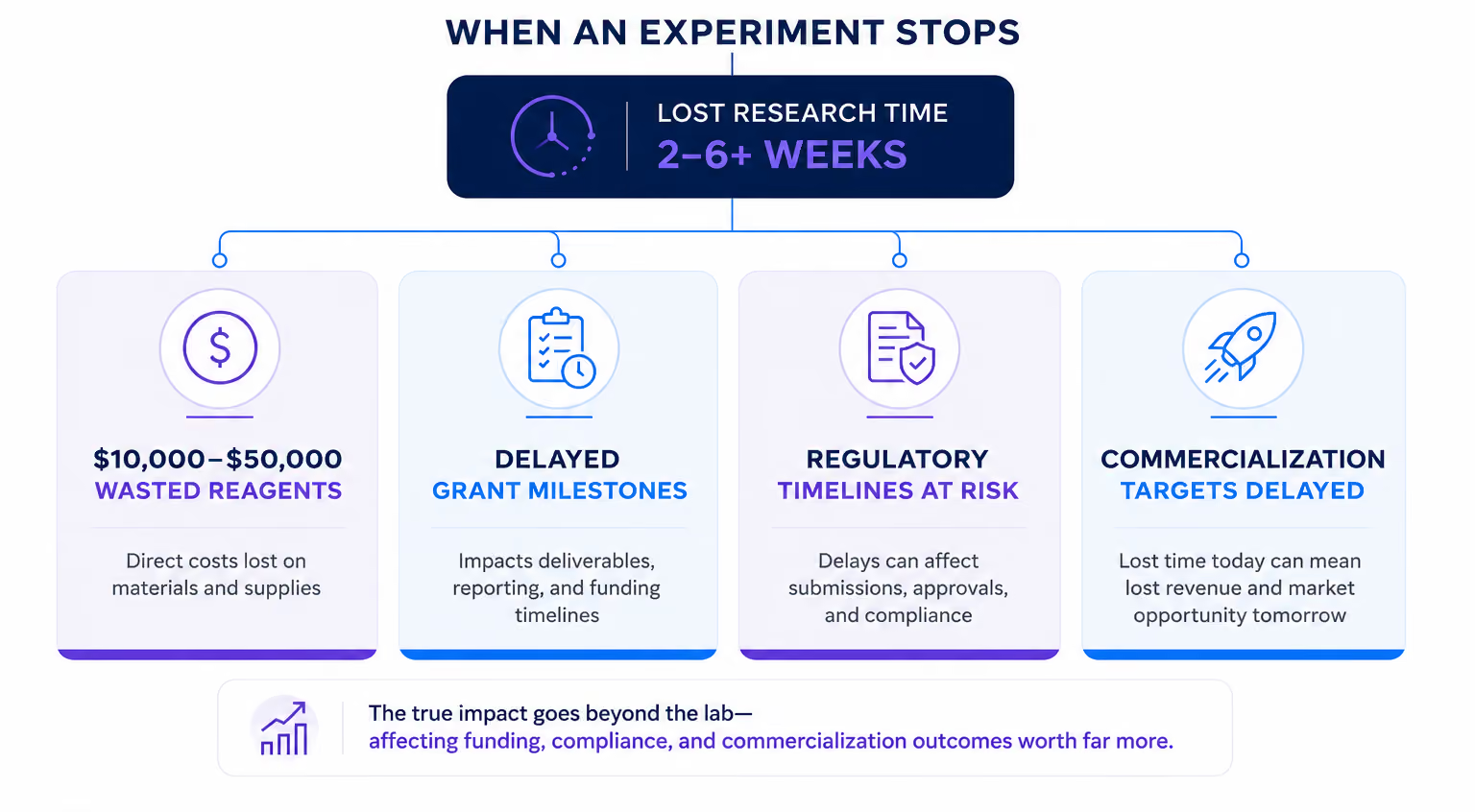
Interrupting time-sensitive research can mean lost work, wasted reagents, and delayed milestones across grant-funded programs or clinical pipelines. Depending on the study, those disruptions may also affect regulatory schedules, development timelines, and the value of prior investment.
When critical expertise is unavailable, work can stop.
In research environments like these, talent mobility can directly support operational continuity by helping keep research timelines, compliance obligations, and substantial financial investments moving forward.
What Makes Relocation Difficult in Life Sciences?
Life Sciences mobility often involves scarce, highly specialized talent working in concentrated research hubs. Housing constraints, credentialing, lab access, and competitive hiring conditions can make relocation especially complex.
Highly specialized talent is difficult to persuade to move.
Many scientists already hold stable positions, have access to grant funding, or work within research ecosystems they are reluctant to leave. Housing supply may be limited near facilities. Policy exceptions increase when local realities conflict with standardised benefits.

Research hubs create housing pressure.
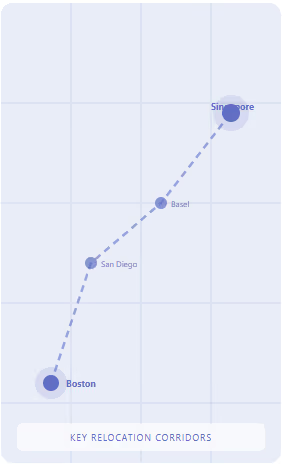
Major Life Sciences clusters—Boston, San Diego, the Bay Area, Basel, Singapore—often have constrained housing markets that complicate relocation timelines.
Learn More >
Regulatory and lab access requirements can delay onboarding.
Even when an employee arrives, credentialing, safety certifications, and facility approvals may still gate when work can begin.
Learn More >
Dual-career households are common.
Spouses or partners often work in similarly specialized fields, making location decisions more complex.
Learn More >
Research continuity expectations are high.
Teams, experiments, and funding timelines continue moving, which means relocation delays create ripple effects across projects.
Learn More >None of these challenges are unusual in Life Sciences. But together they make relocation outcomes less predictable—and execution quality far more important.
Best Practices
In Life Sciences environments, successful relocation programs tend to focus on a few practical disciplines.

What It Takes to Keep Relocation From Slowing the Work
What It Takes to Keep Relocation From Slowing the Work
Planning moves earlier in the hiring cycle.
When talent is scarce and relocation markets are tight, waiting until an offer is accepted to begin planning often compresses timelines unnecessarily.
Setting realistic expectations around destination markets.
Housing constraints in major research hubs can affect timing and acceptance, so relocation timelines must reflect local conditions.
Supporting the full decision to move.
When dual-career households or specialized professionals are involved, relocation success often depends on addressing family, housing, and community considerations alongside the logistics of the move.
For Life Sciences employers, early planning and realistic expectations can reduce relocation friction while protecting hiring timelines, employee acceptance, and continuity of critical work.
Life Sciences Mobility Diagnostic
Answer a few quick questions and we'll point you toward the most relevant insights, tools, or guidance for your situation.
Life Sciences mobility programs rarely struggle for the same reasons. Some organizations face tight research timelines. Others are navigating housing constraints in major hubs, relocating highly specialized scientists, or scaling teams quickly.