


Articles & Whitepapers
Celebrating Service Excellence: NEI Recognizes 2026 Service Exceeding Expectations Award Winners
Omaha, NE October 2026 — NEI Global Relocation, a leading full-service relocation management company, proudly recognizes the exceptional achievements of its Service Partners with the annual Service Exceeding Expectations Awards. These accolades are given to partners who have consistently demonstrated an unwavering commitment to exceeding expectations in service delivery.
The awards are conferred based on a meticulous evaluation of scorecard data gathered from the feedback of NEI account executives and transferees throughout the year. This comprehensive analysis ensures that the recipients are indeed setting the benchmark for exceptional service in the irrespective categories.
"Our Service Partners are an essential extension ofNEI, consistently demonstrating their unwavering commitment to our mission ofdelivering Service Exceeding Expectations to our valued clients and theirrelocating families," affirmed Andrew Dyer, Director of Procurementand Global Service Partner Relations.
This year's winners, selected for their outstandingperformance and dedication to excellence, include:
- Alexander's Mobility Services
- AltoVita
- Cromwell Environmental
- CWS Corporate Housing
- Home Sweet Home
- Icon Moving
- IOR Global Services
- Newland Chase
- NP Dodge Co.
- Porchlight Rental and Destination Services
- Rocket Mortgage LLC
Congratulations to each of these distinguished companies forexemplifying NEI's mission of providing Service Exceeding Expectations. Theircommitment to excellence sets a standard that inspires the entire industry.

Celebrating Excellence: 2026 NEI Global Relocation Service Partner Awards Overview
Each year, NEI Global Relocation celebrates the outstanding achievements of our service partners whose commitment, performance, and integrity set the standard for our industry. These partners play a vital role in delivering seamless relocations and embody our promise of Service Exceeding Expectations—ensuring our clients and their employees receive the highest level of care and support.
Below you'll find this year's award winners, along withlinks to press releases highlighting each category.
Service Partner of the Year
Service Exceeding Expectations
Porchlight Rental and Destination Services
Own It! Awards Winners
Porchlight Rental and Destination Services
Corporate Responsibility
Innovation

NEI Global Relocation Names Icon Relocation as 2026 Partner of the Year
NEI Celebrates Icon Relocation as 2026 Service Partner of the Year for Excellence and Partnership in Global Mobility
Omaha, NE October 2026 – NEI Global Relocation is proud to announce the winner of its prestigious 2026 Service Partner of the Year award, recognizing outstanding performance, strategic collaboration, and meaningful investment in the future of global mobility services. This year's recipient, Icon Relocation, has set itself apart in numerous ways, making it a clear frontrunner among many deserving partners.
Icon Relocation has demonstrated exceptional partnership with NEI, working collaboratively to strengthen global reach and expand support across the EMEA region. Most notably, Icon worked closely with NEI to support the placement of an NEI employee onsite in London, creating a stronger and more connected presence in the region. This initiative has improved responsiveness, enhanced regional alignment, and positioned NEI to better support the evolving needs of clients and business partners throughout EMEA.
Icon's commitment to partnership extends well beyond day-to-day service delivery. Their engagement at a strategic level has been especially valuable, including Simon Johnston's participation on NEI's Advisory Board. Through his involvement, Simon provides thoughtful perspective, industry insight, and a global viewpoint that help inform NEI's strategic direction. His active participation reflects Icon's investment in NEI's long-term success, shared priorities, and continued growth as a global organization. Rather than simply supporting transactions, Icon consistently looks for ways to contribute to broader business goals and create lasting value.
Icon has also advanced the partnership through the introduction of a new profit-sharing referral incentive designed to encourage deeper collaboration and create expanded revenue opportunities for NEI. This initiative reflects a forward-thinking approach to partnership—one focused not only on service execution, but also on innovation, growth, and mutual success. By engaging across multiple levels of the organization, Icon has strengthened relationships, increased alignment, and helped establish a more connected and productive partnership.
Icon Relocation exemplifies the qualities NEI values most in a Service Partner of the Year: collaboration, innovation, strategic thinking, responsiveness, and a genuine commitment to shared success. Their efforts have expanded NEI's global presence, strengthened support for the EMEA region, contributed valuable leadership perspective, and opened new opportunities for growth.
"We are proud to congratulate Icon Relocation on winning Service Partner of the Year," said Andy Dyer, Director of Procurement and Global Service Partner Relations. "Icon has proven to be more than a provider—they are a trusted partner invested in our success today and in the future. Their strategic collaboration, global perspective, and willingness to build something bigger together set a standard we deeply value."
Icon Relocation's exceptional performance aligns perfectly with NEI's core values, making them an outstanding choice for the 2026 Partner of the Year award. NEI congratulates Icon Relocation on their well-deserved recognition!

Honoring Excellence in Action: NEI Celebrates 2026 Own It! Award Winners for Outstanding Partnership and Service
Omaha, NE October 2026 — NEI Global Relocation, a global leader in full-service relocation management, is proud to announce the recipients of this year's Own It! Awards. These awards celebrate the exceptional dedication and commitment of service partners who embody NEI's core philosophy of Own It!
The Own It! Awards recognize partners who consistently go above and beyond to ensure client satisfaction and demonstrate a proactive approach to every opportunity. NEI's Own It! philosophy emphasizes offering value, instilling confidence, and taking responsibility to inspire a positive and productive relocation experience.
Andy Dyer, Director, Procurement and Global Service Partner Relations at NEI Global Relocation, expressed his enthusiasm for this year's recipients, stating, "We are incredibly proud to recognize these winners and the outstanding impact they've made. Their dedication, commitment to excellence, and spirit of partnership exemplify the very best of our industry. It is an honor to celebrate their contributions and the meaningful difference they create every day."
The 2026 Own It! Award recipients are:
Icon Relocation
While supporting an assignee's move from a corporate tenancy to a private rental, Icon Relocation identified an opportunity to add value by recommending departure services that had not originally been authorized. Following check-out, the landlord attempted to retain more than £8,500 of a £9,800 deposit. Recognizing that many of the claims lacked legal justification, Icon acted quickly, challenged the charges, and encouraged the assignee to pursue independent arbitration. The final ruling reduced the amount withheld to just £835, saving the client more than £7,000 while reinforcing confidence in departure services and demonstrating true ownership of the situation.
Ward North American
A relocating family facing their fifth move in six years was already under significant stress while preparing for another major transition. The employee's spouse was pregnant with twins, caring for two young children, and working full-time. Recognizing the family's circumstances, Ward North American shifted its focus from simply managing a move to supporting the people behind it. By providing on-site leadership, continuity throughout the relocation process, and hands-on assistance at both origin and destination, Ward helped create a more supportive experience and earned the family's trust during a particularly challenging time.
Corporate Living LLC
When a temporary housing reservation unexpectedly became complicated over Memorial Day weekend due to a landlord error, Corporate Living stepped in immediately to support the transferee and his family. Although the issue did not originate with Corporate Living, the team worked directly with the landlord to secure additional occupancy time and prevent disruption. When the situation continued to create discomfort for the family, Corporate Living went even further by providing complimentary hotel accommodations, ensuring the transferee, spouse, children, and pets had a safe and comfortable place to stay. Their proactive response transformed a stressful situation into a successful service recovery.
Nelson Westerberg
The relocation of Peter and Meredith Coors from Denver to Dallas required far more than transportation logistics. With Mr. Coors unable to be present for much of the move, Meredith carried much of the responsibility during an emotional transition. Nelson Westerberg's team provided exceptional support throughout the process, offering proactive communication, flexibility, and reassurance every step of the way. Through creative specialty packing techniques, the team also protected more than 40 pieces of valuable artwork while eliminating significant third-party crating costs. Their professionalism and compassion helped create an outstanding relocation experience during a difficult life event.
GlobeSpec
GlobeSpec continues to serve as a trusted advisor and collaborative partner, providing expertise well beyond the traditional home inspection process. Throughout the year, the company worked closely with NEI to strengthen inspection protocols, assist account executives in understanding repair recommendations, and provide valuable guidance on local building requirements. Most importantly, when issues arise, GlobeSpec consistently takes ownership, works collaboratively to identify solutions, and stands behind its work. Their integrity, transparency, and commitment to partnership embody the spirit of the Own It! Award.
U.S. Bank
U.S. Bank demonstrated exceptional ownership while supporting a first-time homebuyer relocating through a corporate mobility program. Facing a complex transaction, specialized financing requirements, and unique family considerations, the transferee required both expertise and patience. The U.S. Bank Relocation Mortgage Team responded with empathy, personalized guidance, and transparent communication throughout the process. By keeping both the transferee and NEI informed at every stage, the team created confidence, reduced stress, and delivered a successful outcome.
Porchlight Rental and Destination Services
After relocating to Florida, a transferee and his pregnant spouse discovered significant mold concerns within a rental property they had independently secured. Understanding the urgency of the situation, Porchlight immediately assigned a local expert to conduct an extensive housing search. After carefully reviewing dozens of potential properties, coordinating with listing agents, and verifying availability, the team identified suitable alternatives and quickly helped the family secure a new home. Their diligence, responsiveness, and genuine concern for the family's wellbeing exemplified an outstanding commitment to service.
NYC Navigator LLC
When one of NEI's long-standing service partners unexpectedly ceased operations, NYC Navigator immediately stepped forward to ensure uninterrupted service for clients. The company quickly onboarded trusted consultants, established operations in a new market, and invested in training to strengthen internal capabilities. By taking ownership of the transition, preserving client confidence, and proactively building expertise, NYC Navigator successfully maintained continuity during a period of significant change.
MSS Inc.
MSS demonstrated ownership on a national scale through a multi-city training initiative designed to strengthen service consistency and collaboration across its contractor network. Over a three-month period, the company brought training, best practices, and operational resources directly to more than 200 technicians representing over 100 companies. By investing in education, communication, service quality, and provider relationships, MSS strengthened alignment across its network and reinforced its commitment to delivering superior experiences for clients and transferees.
REA Careers
When a transferee sought assistance returning to the workforce after a lengthy career pause, REA Careers provided personalized coaching focused on building confidence, strengthening professional branding, and navigating the U.S. hiring market. Through resume development, LinkedIn optimization, interview preparation, and ongoing encouragement, the coaching team helped the transferee successfully secure a software engineering position. Their responsiveness, empathy, and commitment to individualized support made a meaningful impact during an important life transition.
Helen Adams Realty
Helen Adams Realty consistently delivers exceptional service and support to relocating employees and families. Whether assisting with home marketing, home finding, or area orientation services, the team demonstrates a willingness to go above and beyond to ensure a positive experience. Their reliable communication, attention to detail, and dedication to client care have made them a trusted partner and a deserving recipient of the 2026 Own It! Award.
NEI Global Relocation proudly congratulates all 2026 Own It! Award recipients. Through their accountability, initiative, compassion, and commitment to excellence, these partners exemplify what it means to Own It! and continue to strengthen the relocation experience for clients and transferees around the world.

Omaha, NE October 2026 – NEI Global Relocation, a pioneer in full-service relocation management, is pleased to announce Rocket Mortgage LLC as the recipient of the 2026 NEI Innovation Award. This year's award honors a service partner that has introduced transformative technology and delivered measurable value to clients, transferees, and the broader relocation ecosystem.
Rocket Mortgage has redefined the mortgage experience through the deployment of advanced agentic artificial intelligence across its lending operations. Moving beyond traditional automation, the company introduced 32 custom, interconnected AI agents capable of localized decision-making throughout the mortgage process—analyzing complex purchase agreements, verifying assets and earnest money deposits, and auditing income documentation directly from source data. Alongside this, Rocket Mortgage launched fully automated digital purchase pre-approvals, allowing borrowers to generate verified lending letters at any time without waiting for manual underwriting.
The benefits extend well beyond Rocket Mortgage's own operations. Transferees gain a more transparent, streamlined experience with fewer delays and less paperwork. Corporate relocation managers benefit from compressed timelines that protect employee start dates. Real estate professionals gain a more reliable partner and faster access to verified financing. Notably, 40% of pre-approval letters are now generated outside traditional business hours, giving buyers instant purchasing power in competitive markets and contributing to a 33% higher conversion-to-close rate.
"Innovation is most meaningful when it creates a tangible benefit for the people we serve," said Andrew Dyer, Director of Procurement and Global Service Partner Relations at NEI Global Relocation. "Rocket Mortgage has demonstrated an extraordinary commitment to improving the mortgage experience through intelligent automation and customer-focused technology. Their willingness to challenge traditional processes and deliver measurable results makes them a deserving recipient of NEI's 2026 Innovation Award."
The NEI Innovation Award recognizes service partners who drive progress, challenge industry conventions, and develop forward-thinking solutions that create lasting value for clients and transferees.
NEI Global Relocation extends its sincere congratulations to Rocket Mortgage LLC on this well-deserved recognition.

Omaha, NE October 2026 — NEI Global Relocation, a distinguished full-service relocation management company, proudly announces the recipients of the 2026 Corporate Responsibility Awards. These accolades celebrate companies that have demonstrated exceptional commitment to philanthropy, environmental sustainability, community engagement, and social impact. Through meaningful action and employee involvement, this year's recipients exemplify how organizations can create lasting positive change while strengthening the communities they serve.
The Corporate Responsibility Awards recognize companies that have embedded responsible business practices into their culture and operations. This year's esteemed winners are:
Formula Group
Formula Group has demonstrated an extraordinary commitment to improving lives through healthcare, education, inclusion, and community outreach. During the past year, the company donated its third ambulance to improve healthcare access, provided 30 medical beds for senior citizens, and continued supporting cancer patients through ongoing medical assistance. Formula Group also invested in education and empowerment initiatives, providing vocational training to more than 200 girls in Delhi and distributing school supplies to students in Mumbai.
Employee involvement remains central to the company's efforts. Through the WISH Initiative, Formula employees personally fulfill the wishes of children from underserved communities. Team members also volunteer with children undergoing cancer treatment, support elderly care facilities, and engage with para-athletes through sports and nutritional assistance programs. These efforts reflect a company-wide commitment to creating meaningful, lasting impact while fostering a culture of compassion, inclusion, and social responsibility.
LARM Group
LARM Group has built corporate responsibility into the foundation of its business through programs that support housing, education, environmental conservation, and economic empowerment throughout Latin America. Working alongside organizations including TECHO, Vivienda Digna, Kantaya, Arbio, and Entre Árboles, LARM helps strengthen vulnerable communities through housing projects, educational opportunities, conservation efforts, and reforestation initiatives.
A distinctive aspect of LARM's approach is its focus on economic inclusion and cultural preservation. By incorporating products crafted by indigenous artisan women into the relocation experience, the company helps generate sustainable income while promoting local cultural heritage. Employee participation plays a vital role in these programs, with team members volunteering on housing projects, environmental initiatives, and community partnerships across multiple countries. Together, these efforts demonstrate LARM's long-term commitment to creating positive social and environmental outcomes throughout the region.
Interconex
Interconex continues to lead by example through a comprehensive environmental, social, and governance strategy aligned with the United Nations Global Compact and Sustainable Development Goals. In 2025, the company exceeded its emissions reduction target, achieving a 12.56% reduction in operational emissions while expanding carbon reporting capabilities and developing technology designed to help relocating employees make more sustainable decisions.
The company's impact extends beyond environmental stewardship. Through longstanding partnerships with organizations such as the Arbor Day Foundation, Move For Hunger, Habitat for Humanity, and Home Sweet Home, Interconex supports reforestation, disaster recovery, hunger relief, and community development initiatives. Since 2010, the company's partnership with the Arbor Day Foundation has contributed to the planting of more than 48,000 trees. Interconex employees actively participate in wellness initiatives, sustainability education, community service programs, and environmental awareness campaigns, helping create a culture where corporate responsibility is embraced across the organization and reflected in every relocation they manage.
"Our Corporate Responsibility Award recipients demonstrate the tremendous impact businesses can have when they make community investment, sustainability, and social responsibility a priority," said Michelle Moore, President | CEO of NEI Global Relocation. "Formula Group, LARM Group, and Interconex have each created meaningful programs that strengthen communities, empower individuals, and drive positive change. We are proud to recognize their outstanding contributions and celebrate the difference they make around the world."
Congratulations to the 2026 Corporate Responsibility Award recipients for their exceptional commitment to creating positive change. Their dedication serves as a powerful reminder that business success and social impact can go hand in hand, inspiring meaningful progress for communities across the globe.

Moving Skills, Not Just People
The skills required for success are changing rapidly as AI reshapes jobs, workflows, and business priorities. LinkedIn projects that 70% of the skills used in most jobs will change by 2030, creating an urgent need for organizations to identify, develop, and deploy the capabilities they will need next. For Global Mobility leaders, this shift reinforces the strategic importance of mobility as a mechanism for getting critical skills to the right place at the right time.
Corporate demand for AI capabilities has accelerated, while the pool of workers who possess these skills remains limited. This creates major implications for Talent Acquisition, Workforce Development, and Global Mobility, because skills-based workforce planning depends not only on finding talent, but also on deploying it efficiently, compliantly, and with the right employee experience.
The Rise of Skills-Based Workforce Planning
Historically, labor shortages were viewed primarily as shortages of people. Organizations needed more engineers, analysts, technicians, or project managers. Increasingly, however, companies are discovering that the greater challenge is a shortage of critical capabilities.
AI adoption is accelerating demand for specialized expertise such as AI engineering, data analytics, cybersecurity, automation, digital transformation, and advanced problem-solving.[1]
At the same time, human-centered capabilities such as communication, leadership, adaptability, and analytical thinking have become even more valuable as organizations integrate AI into daily operations.[2]
Companies are placing greater emphasis on:
- Understanding the skills they have,
- Identifying the skills they need, and
- Creating pathways to close those gaps.
In fact, LinkedIn reports that the rate at which members add new skills to their profiles has increased by 140% since 2022. This reflects the speed of change and the growing importance of continuous learning.[3]
Why This Matters for Global Mobility
The question today is changing from "Where do we need people?" to "Where do we need skills—and what mobility infrastructure is required to place those skills where they can create the greatest business value?"
Implications extend well beyond learning and development initiatives. As organizations adopt skills-based workforce strategies, Global Mobility leaders are increasingly positioned to help business leaders deploy critical talent quickly, compliantly, and compassionately to the locations where those skills create the greatest business value.
This matters because when AI, digital, or transformation capabilities are in short supply, mobility programs become powerful tools for connecting critical talent with business priorities.
Short- and Long-term assignments, project-based deployments, international cross border business trips, and internal mobility programs help organizations:
- respond more quickly to emerging opportunities,
- accelerate capability transfer, and
- address workforce and skills gaps.
This evolution shifts mobility from a transactional relocation function to a strategic workforce capability. For mobility leaders, this means:
- participating earlier in workforce planning discussions,
- helping identify where critical skills need to be deployed, and
- providing data that demonstrates how talent mobility supports business outcomes.
How Global Mobility Creates Strategic Advantage in an AI Economy
AI is unlikely to eliminate the need for mobility. Instead, it may increase the need for organizations to move specialized skills quickly and selectively, making internal mobility, flexible deployment models, and reskilling important competitive advantages.
This is where Mobility can create differentiated value. As business leaders focus on skills, mobility teams can translate workforce priorities into practical deployment pathways, balancing speed, cost, compliance, employee readiness, and business continuity.
To compete effectively in a skills-driven economy, consider four interconnected priorities:
- First, invest in workforce intelligence. Leaders need greater visibility into the skills that exist across their organization and where those capabilities are located. Skills inventories, talent marketplaces, and skills-mapping technologies can help identify capabilities across the enterprise.
- Second, understand how work gets done. Organizations cannot effectively automate what they do not fully understand. Mapping workflows, bottlenecks, repetitive tasks, and knowledge dependencies helps leaders determine where AI can create meaningful value. Deloitte reports that 75% of technology leaders believe their operating models must fundamentally change to generate greater value from AI. For mobility leaders, that same operating-model discipline should extend to assignment design, service delivery, supplier coordination, compliance, and employee support.
- Third, prioritize reskilling and internal mobility. Building new capabilities from within can often be faster and more cost-effective than competing in an increasingly constrained external talent market.1
- Fourth, align mobility programs with workforce strategy. Mobility teams can help business leaders deploy critical expertise through relocations, temporary assignments, business travel, and cross-border project support.
Importantly, this means mobility decisions are becoming more strategic, increasingly focused on deploying scarce skills to the locations, projects, and business priorities where they can create maximum value.
The AI Talent Demand: Accelerating a New Mobility Strategy
Evidence points to a widening mismatch between demand for specialized AI capabilities and the availability of experienced talent, although public sources do not provide a single definitive global shortage figure. That uncertainty makes workforce agility even more important: organizations need the ability to identify scarce capabilities, build internal pipelines, and deploy expertise across locations when business needs shift.
Today is a good time to evaluate whether your Global Mobility and Talent Management strategies are aligned with your company's short-term and long-term skills needs.
NEI helps organizations connect Global Mobility, Talent Management, and workforce planning so critical capabilities can be positioned where they have the greatest impact, supported by practical mobility policies, supplier coordination, compliance insight, and an employee experience that helps talent move successfully.
To discuss how your organization can better align workforce planning, skills development, and mobility strategy, contact your NEI representative or visit NEI Global Relocation.
The above article is provided for informational purposes only. Please consult your tax, legal, or accounting advisors before making any decisions or transactions.
References
[1] LinkedIn, Work Change Report PDF (2025) LinkedIn Work Change Report PDF and LinkedIn News Summary
[2] LinkedIn, Work Change Report: AI Is Coming to Work (2025) Work Change Report
[3] World Economic Forum, Future of Jobs Report 2025 Future of Jobs Report 2025
[4] Deloitte, 2026 Global Technology Leadership Study and Rewiring the Enterprise Operating Model for AI Scale (2026) 2026 Global Technology Leadership Study and Rewiring the Enterprise Operating Model for AI Scale [deloitte.com]
[5] Second Talent, Top 50+ Global AI Talent Shortage Statistics 2026 (2026) Global AI Talent Shortage Statistics

It’s Just a Trip
An often-overlooked reality is that a business trip does not always remain "just a trip."
Most organizations can quickly identify employees on formal global assignments, but identifying every employee who regularly crosses borders to perform work for the company can be more difficult.
Many organizations have employees who function as Extended Business Travelers or Frequent Business Travelers and regularly cross borders for business. However, if these travelers are not being managed as a distinct mobile workforce population, it can create compliance risks, limit workforce visibility, and cause organizations to miss valuable insights regarding how talent is being deployed globally.
Consider this common scenario: an employee travels to Germany for two days of meetings, but they arrive early and spend several additional days working remotely from their hotel.
The employee views this as, “I’m just doing my normal job virtually while traveling.” Depending on the employee’s nationality, immigration status, activities, length of stay, and applicable rules, local authorities may evaluate those additional workdays differently.
- The immediate risk is limited visibility: the organization may not know where critical business activity is actually taking place or how work is being performed across borders.
- The larger risk is interpretation: what the employee views as “routine remote work” may be viewed by local authorities as performing work inside their jurisdiction.
Governments Have More Visibility Than Ever
Governments are gaining greater visibility into international travel patterns and border crossings through increasingly sophisticated traveler tracking systems. The EU’s Entry/Exit System registers non-EU nationals traveling for short stays in 29 European countries, including travel document data, biometric data, and entry and exit dates, while also improving identification of overstays.1 Although such systems do not establish what work an individual performed, they may make inconsistencies between reported travel and immigration or tax positions easier to identify.
Countries also maintain strict distinctions between business visitor activities and activities requiring work authorization. In the UK, for example, certain business activities are permitted, while other paid or unpaid work activities may require a visa.2, 3
For some organizations, informal traveler oversight, spreadsheet-based tracking, or reliance on employee self-reporting may not provide adequate visibility in today’s age of big data.
Turning Business Travel into a Strategic Advantage
A more integrated approach is to view business travel not only as a “travel management” issue, but also as a “workforce deployment” issue.
Every cross-border business trip reflects: 1) A business decision about where talent is needed; 2) How work gets accomplished; and 3) Where company risk may need to be evaluated. Rather than managing every traveler equally, companies can segment travelers based on
- duration,
- destination,
- frequency, and
- planned activities.
Companies that connect travel oversight with mobility, HR, tax, and compliance functions gain higher visibility into workforce deployment, emerging risk areas, and talent movement patterns that can support global business objectives.
Cross-border workforce movement visibility is more than a mobility metric. It is a strategic insight that can inform talent strategy, resource allocation, and business growth decisions while helping organizations identify and manage risk.
Know Who Your Truly Mobile Employees Are
Cross-border workforce activity is a source of strategic insight, and companies well positioned for the global future will not necessarily be those with the most international travel activity. They will be those with the clearest understanding of how cross-border workforce activity supports:
- business objectives,
- talent strategy, and
- risk management.
The answer may reveal a globally mobile workforce population hiding in plain sight – but also an opportunity to strengthen workforce visibility.
Companies can strengthen their approach by confirming three things: who is working across borders, what activities they are performing while in another country, and whether existing travel, global mobility, tax, immigration, and compliance processes provide enough visibility to support today’s increasingly mobile workforce. Without such clarity, global organizations may rely on incomplete travel data or employee self-reporting while missing work activity that could carry operational or compliance implications.
Doing so can provide a clearer understanding of how talent is being deployed globally and help leaders make more informed business, workforce, and risk-management decisions.
If you would like more information about global relocation policy and benefit development or any other relocation-related topic, please contact your NEI representative or visit www.neirelo.com any time.
The above article is provided for informational purposes only. Please consult your tax, legal, or accounting advisors before making any decisions or transactions.
References
[1] European Commission, Entry/Exit System (EES)
[2] GOV.UK, Immigration Rules Appendix Visitor: Permitted Activities
[3] GOV.UK, Visit the UK as a Standard Visitor: Visit on Business View source

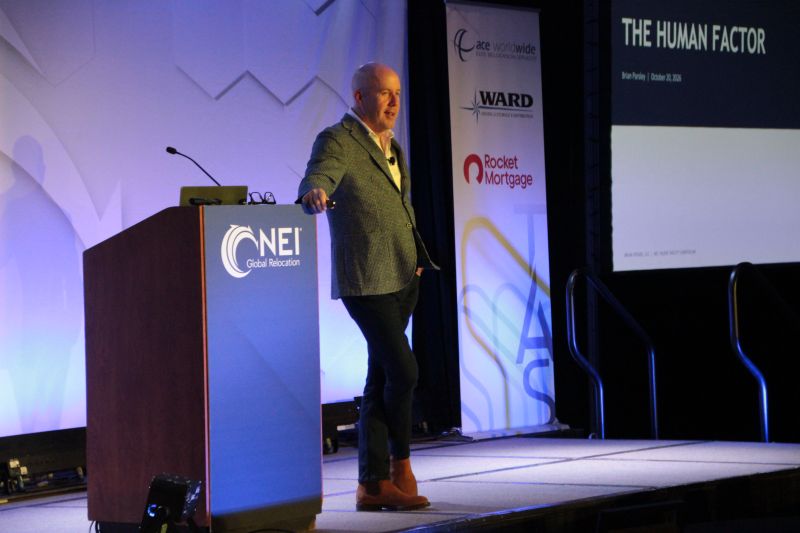
Clients, industry professionals and NEI team members gathered in Omaha for NEI’s 2026 Talent Agility Symposium, bringing together different perspectives around a shared goal: helping organizations navigate the changing world of talent mobility.
Throughout the symposium, conversations explored change management, program governance, the future of the mobility function, industry challenges and demonstrating mobility’s value. Sessions from Brian Parsley, Kayla Conrad and Michelle Hill, along with panels, breakouts and client roundtables, offered plenty of opportunities to exchange ideas and consider new approaches.
Just as important were the conversations outside the sessions. From the welcome reception at The Durham Museum to networking throughout the day and the Client Recognition Dinner, the symposium gave attendees time to reconnect, build new relationships and learn directly from one another.
Thank you to everyone who joined us in Omaha and helped make this year’s symposium such a meaningful experience. We appreciate the ideas, candid conversations and perspectives shared throughout the event, and we look forward to carrying those conversations forward.







ETIAS Delayed Again as 2027 Launch Becomes More Likely
ETIAS Launch Timeline Remains Uncertain
The European Union has again delayed implementation of the European Travel Information and Authorization System (ETIAS).
While the program will eventually introduce a new pre-travel authorization requirement for visa-exempt travelers entering much of Europe, no action is currently required. The EU has not yet announced a specific launch date for ETIAS; its official site states that ETIAS is not currently in operation and that the start date will be announced several months prior to launch. Recent reporting indicates the prior late-2026 timing may shift, with a 2027 launch now viewed as increasingly likely.
ETIAS will apply to travelers from countries that currently enjoy visa-free access to the Schengen Area, including the United States, Canada, the United Kingdom, Australia, Japan, and many others. Once implemented, eligible travelers will need to complete a short online application and receive authorization before boarding transportation to participating European countries.1
For employers and global mobility teams, ETIAS remains a future travel compliance requirement to monitor, but no changes to travel processes or policies are needed at this time.
To be clear, ETIAS:
- Is not a visa and does not change anyone's visa-free status
- Is a pre-travel authorization for visa-exempt nationals ²
- Covers 30 European countries - the Schengen area plus Cyprus ²
- Is for short stays of up to 90 days within any 180-day period ²
- Is linked electronically to the traveler's passport, rather than stamped or issued separately ²
ETIAS Will Be in Addition to EES
As a reminder, the EU's biometric border-registration program — the Entry/Exit System (EES) — became fully operational across Schengen external border crossing points on 10 April 2026. EES replaces passport stamping with digital records of entries and exits for non-EU nationals traveling for short stays. It requires no advance application because registration occurs at the border.
NEI Global Relocation will continue to monitor ETIAS developments and provide timely updates as additional details are announced.
If you would like to discuss global relocation, mobility, or talent management strategy trends, please contact your NEI representative at any time.
The above article is provided for informational purposes only. Please consult your tax, legal, or accounting advisors before making any decisions or transactions.
Sources
- European Union, European Travel Information and Authorisation System (ETIAS): travel-europe.europa.eu/en/etias. Accessed September 2026.
- European Commission, Directorate-General for Migration and Home Affairs, Entry/Exit System (EES) is fully operational, 10 April 2026: home-affairs.ec.europa.eu.

The Hidden Cost of Relocation: When Employees Leave After the Move
Everyone measures the cost of relocating an employee. Far fewer measure the cost when that investment walks out the door.
For many organizations, relocation accounting ends when the employee arrives, begins work, and the last relocation expense is recorded. But if that employee resigns a year later, the true cost of the move is rarely attributed to the original relocation investment.
Where Money Disappears
Ask any HR, Global Mobility, or Talent Management leader what makes relocation generally expensive, and they'll point to the obvious costs: moving the household goods, home sale, temporary housing, flights, hotels, and tax assistance or equalization for assignees abroad.
All true, yet that's not where the real money disappears.
Whether you're transferring someone across the country or sending them across the world, the big cost shows up later, after the boxes are unpacked, and the employee is on the job.
It’s when the employee you just spent months relocating decides to quit, and few companies count it against the original relocation spend.
The International Case
When a company relocates an employee and their family across borders or across the globe, the company’s costs and investment exposure are significant.
Long-term international assignments typically run $250,000 to $1 million or even more, with costs varying based on company goals, job role, country of repatriation, and assignment period. That's the investment.1
SHRM reports that a quarter of repatriates leave their employers within one year of returning, and roughly half are gone within two years. Findings point to a lack of promotional opportunities and the inability to capitalize on the skills gained abroad, according to SHRM's "Retaining Repatriates."2
The U.S. Domestic Case
On paper, domestic relocation may appear low- risk compared with international relocation——no visas, no cultural or language adjustments, and no repatriation necessary—but the trend is still visible.
On average, 11% of employees who transfer domestically leave the company within two years of relocating, according to SHRM.3 Those are employees walking away from a company that paid to support and develop them professionally.
A Structural Gap and the Cost of Losing Them
A few questions can help reveal whether the program has a structural gap:
- Does a formal career-management process exist for those who are relocating or on assignment?
- Is there a formal international assignee repatriation program tied to retention?
- Does the organization have an identified pipeline of candidates ready for U.S. domestic or global roles?
The company's investment in the employee and in their relocation or international assignment package is usually unrecoverable. When those individuals leaves, the company is not just facing a normal replacement cost. The company loses the relocation investment once, then pays again to replace the employee.
Analysis from the Center for American Progress, reviewing more than two dozen case studies of general employee turnover, found the typical cost of replacing an employee runs 16% to 21% of salary for most roles. It climbs as high as 213% for highly specialized or executive positions. To be clear, that figure is not specific to relocated or repatriated employees, but it is a baseline cost of replacing talent. Layer that onto a sunk relocation investment and the real, higher number is one most companies do not get around to calculating.4
Which is exactly why most companies may never see the full investment picture.
Action Steps
The place to start is before the move happens. Employers should know why the move is being made, what the employee is expected to contribute after arrival, and what would make staying worthwhile once the relocation is complete.
Practically speaking, employers need to:
- Look beyond the move itself
- Track what happens to relocated employees after they arrive, especially during the first twelve to eighteen months
- Compare that information against the purpose of the move, the cost of the relocation, and the role the employee was expected to fill.
If a relocation program has a clear plan for the move but no plan for what comes next, the retention risk is already built in.
That information becomes useful when it is shared across Mobility, Talent Management, HR, and business leadership. If relocated employees are leaving soon after a move, the question should not stop at what those relocations cost. It should be whether those employees had clear reasons to stay, defined next steps, and roles that made good use of the investments the organization had already made.
If you would like to discuss global relocation, mobility, or talent management strategy trends, please contact your NEI representative at any time.
The above article is provided for informational purposes only. Please consult your tax, legal, or accounting advisors before making any decisions or transactions.
Sources

Strong relocation programs depend on consistent execution across the employee experience, international service delivery, supplier coordination, technology and data security.
Through 2026, NEI Global Relocation has continued to earn recognition across those areas from relocating employees, corporate mobility professionals, independent auditors and global mobility organizations.
Leading Results in International Mobility
In the 2026 Relocation Managers’ Survey© on international mobility from Trippel Survey & Research, NEI earned five #1 or tied-for-#1 rankings—the most among participating relocation management companies. Top results included the selection of on-the-ground local service providers and satisfaction with the RMC team supporting expatriates.
The findings provide an independent measure of NEI’s ability to support international assignments and corporate global mobility programs across markets.
Read more about NEI's 2026 international mobility results
Highest Average Relocating Employee Satisfaction Score
Relocating employees also placed NEI at the top of the 2026 Nationwide Relocating Employee Survey©.
NEI earned an 8.72 out of 10 average satisfaction score, the highest among relocation management companies in the survey’s large-sample category. The result marked the third consecutive year NEI earned the highest average RMC score.
For employers evaluating relocation management companies, the research offers direct feedback from the employees and assignees experiencing relocation services firsthand.
Explore the 2026 relocating employee survey results
Gold Stevie® Recognition for Company of the Year
NEI received a Gold Stevie® Award for Company of the Year – Business & Professional Services, Medium-size in the 2026 International Business Awards®.
The recognition adds a broader measure of organizational performance to NEI’s results in independent global mobility and relocation research.
Read about NEI's 2026 Gold Stevie recognition
Shortlisted for EMEA Relocation Management Company of the Year
NEI has been shortlisted for Relocation Management Company of the Year at the 2026 FEM EMEA EMMAs, extending a year of international recognition following its Highly Commended distinction in the same category at the 2026 FEM APAC EMMAs.
The EMEA shortlist adds another independent industry perspective to NEI’s 2026 performance across international mobility, employee satisfaction and organizational excellence.
Read more about NEI’s 2026 FEM EMEA EMMAs recognition
Highly Commended for APAC Relocation Management Company of the Year
NEI’s international performance also received recognition in Asia-Pacific. At the 2026 FEM APAC EMMAs, NEI was named Highly Commended for Relocation Management Company of the Year.
The recognition reflects NEI’s work supporting global mobility programs across APAC and complements its 2026 international mobility survey performance.
View the 2026 FEM APAC EMMA winners and highly commended entries
Five Consecutive Years of Zero SOC Audit Findings
In 2026, NEI also completed its SOC 1 and SOC 2 Type II audits with zero findings for the fifth consecutive year.
For Global Mobility, Procurement and Information Security teams, the record provides independent validation of the financial, security, availability and confidentiality controls supporting NEI’s relocation services and technology environment.
Learn more about NEI's SOC 1 and SOC 2 results
Consistent Performance Across Global Mobility
No single ranking or award defines the performance of a relocation management company. Taken together, however, NEI’s 2026 results provide independent perspectives from corporate mobility leaders, relocating employees, industry judges and third-party auditors.
For organizations evaluating a partner for corporate relocation, international assignment management or broader global mobility services, those results demonstrate a consistent record across the areas that matter to both employers and their mobile employees.
APAC recognition reinforces NEI’s international mobility performance
NEI Global Relocation has been named one of four finalists for Relocation Management Company of the Year in the 2026 FEM APAC EMMAs, placing NEI among a select group of relocation management companies recognized for their work supporting global mobility programs across the Asia-Pacific region.
Presented by the Forum for Expatriate Management (FEM), the APAC EMMAs recognize achievement across the global mobility industry. The Relocation Management Company of the Year category evaluates evidence of relocation services delivered, process improvements, employee satisfaction, efficiencies and positive impact on clients and other stakeholders. FEM notes that entries are assessed by independent judges who are senior corporate leaders and mobility decision-makers.
Independent Recognition of International Mobility Performance
The APAC shortlist comes during a year in which NEI’s international capabilities have received recognition through several independent measures.
In the 2026 Trippel International Mobility Survey, NEI earned five #1 or tied-#1 rankings—the most among participating relocation management companies. Its leading results included #1 rankings for the selection of on-the-ground local service providers and satisfaction with the RMC team supporting expatriates.
Both areas have practical significance in Asia-Pacific, where international assignments depend on close coordination between global mobility teams and specialists operating within individual destination markets. Immigration requirements, housing, destination services and other elements of an international relocation are ultimately delivered within the local environment, making the quality and coordination of those resources central to the employee and client experience.
NEI supports this work through a global operating structure spanning the Americas, EMEA and APAC. NEI's regional APAC office is located in Singapore, alongside its U.S. headquarters in Omaha and EMEA office in Switzerland. Across all three regions, NEI’s international leadership coordinates teams and service resources to support employees moving between markets around the world.
“APAC brings together an extraordinary range of markets, cultures and mobility requirements, so strong regional coordination and local expertise are essential to delivering a consistent experience,” said Mollie Ivancic, Senior Vice President, International Services at NEI Global Relocation. “Being shortlisted for Relocation Management Company of the Year is meaningful recognition for our international teams and partner network who make that experience possible every day.”
Supporting Global Programs Across Regions
Multinational employers need mobility programs that work well in each destination while fitting into a consistent global framework. Each move must be coordinated across markets, with employees and program leaders supported throughout the assignment, from initial planning through repatriation.
The FEM APAC EMMAs shortlist adds another independent perspective to NEI’s international performance record. Winners of the 2026 FEM APAC EMMAs will be announced September 3, 2026, in Singapore at the awards ceremony concluding the FEM APAC Summit.
About NEI Global Relocation
NEI Global Relocation is a certified Women’s Business Enterprise (WBE) providing global mobility and assignment management solutions to more than 230 clients, including Fortune Global 100, Fortune 500 and Fortune 1000 companies. Headquartered in Omaha, Nebraska, with offices in Switzerland and Singapore, NEI supports corporate relocation programs through consultative expertise, technology, benchmarking, global service partner resources and end-to-end relocation services.
NEI Ranked No. 1 in Relocating Employee Satisfaction
Top-Rated by the Employees Who Experience Relocation
NEI Global Relocation earned the top average satisfaction score among large-sample relocation management companies in the 32nd annual Trippel Nationwide Relocating Employee Survey©.
Conducted by Trippel Survey & Research, LLC, the annual survey gathers feedback directly from transferees and assignees about their experiences with relocation service providers. The 2026 survey collected evaluations from 4,655 relocating employees representing 56 corporations, federal government entities and nonprofit organizations during a six-month period, ending June 30, 2026.
Among relocation management companies meeting the survey's large-sample criteria, NEI earned the highest average satisfaction score of 8.72 on a 10-point scale, compared with an industry average of 8.56. NEI also achieved a 53% net satisfaction score, reinforcing the positive experiences reported by employees and assignees who used its services.
Recognition That Starts With the Relocating Employee
The Nationwide Relocating Employee Survey provides an objective view of satisfaction by asking transferees and assignees to evaluate the overall service they received on a 10-point scale.
Respondents included domestic U.S. transferees and assignees across a range of move types, employment statuses and benefit levels.
For NEI, the result demonstrates a consistent commitment to high-quality, personalized relocation experiences across diverse employee needs.
A Stronger-Than-Industry Performance
NEI's 8.72 average satisfaction score was the highest among the six relocation management companies in the large-sample category.
Large-sample RMCs collectively earned an average score of 8.57, while all RMCs included in the survey averaged 8.56. NEI outpaced the overall industry average by 0.16 points.
The survey also generated 236 individual evaluations of NEI's services, contributing to a meaningful representation of employee experiences.
NEI's 53% net satisfaction result further underscores the positive feedback reflected in its No. 1 average score.
Continuing a Tradition of Industry Leadership
The Nationwide Relocating Employee Survey complements the Trippel Relocation Managers' Survey by capturing the employee perspective, offering a broader view of relocation performance from both program leaders and the people experiencing a move.
For NEI, the message is clear: exceptional relocation experiences matter to both the organizations we serve and the people we relocate.
“Our employees and clients are at the heart of everything we do,” said Janell Anderson, Chief Experience Officer of NEI Global Relocation. “Receiving the highest average satisfaction score from the people who experience our services firsthand is especially meaningful and reflects our teams' commitment to personalized support, responsive service and an employee-first relocation experience.”
Delivering Experiences That Make a Difference
Relocation is a significant personal and professional transition for employees and their families.
NEI combines mobility expertise with responsive communication and personalized support from initial planning through move completion.
The result is an experience designed to meet program requirements while building employee confidence and organizational value.
The 32nd annual Nationwide Relocating Employee Survey provides meaningful evidence that this approach is resonating with relocating employees.
NEI Global Relocation is honored to be recognized as the top relocation management company by average satisfaction score among large-sample providers and remains committed to delivering exceptional experiences for every employee, every move and every client.
Survey data and rankings referenced in this article are derived from the 32nd annual Trippel Nationwide Relocating Employee Survey©, conducted by Trippel Survey & Research, LLC. The 2026 survey was conducted during the six-month period ending June 30, 2026, and included evaluations from 4,655 transferees and assignees representing 56 corporations, federal government entities and nonprofit organizations. Supplier performance is evaluated using average satisfaction score and net satisfaction. Results should be viewed comparatively, as sampling size and composition may affect statistical accuracy.
How Partial Relocations Can Expand Your Mobility Strategy
Employee relocations remain one of the most effective tools companies have for deploying talent, opening new markets, and building leadership pipelines. Yet, businesses don't always move at the same pace as families. Partial relocations are one way mobility teams are beginning to close that gap.
Partial Relocations: What Leaders Need to Know
Alongside permanent domestic and international moves, more organizations are seeing requests for partial relocations—where an employee relocates first, delays family movement, commutes temporarily, or maintains two residences during a transition.
Partial relocations are not replacing traditional relocations, but for some companies they are expanding their mobility toolkit for key projects and talent mobility. Realtor.com shared TaskRabbit’s 2026 data showing a 37% year-over-year increase in partial move bookings during the first four months of this year.
For HR and Global Mobility leaders, understanding when and how to use partial relocations is becoming increasingly important.
Gaining Attention
According to Deloitte’s 2025 Gen Z and Millennial Survey(1), flexibility, work-life balance, and personal well-being remain top workplace priorities for much of today’s emerging workforce(2). While not mobility-specific, this data reflects broader workforce expectations that are increasingly showing up in relocation conversations.
As these generations continue to make up a growing share of the workforce, mobility expectations are becoming more nuanced (3). That shows up in different ways:
- A spouse may need time to transition out of their role
- Children may need to finish a school term
- Employees may be supporting aging parents
- A project may require quick deployment before a full household move is feasible
- Hybrid work may allow for short-term commuting while longer-term decisions are made
When Using Partial Relocations May Make Strategic Sense
Partial relocations work best when business timelines and employee readiness don't align. This is a common reality in today's environment.
For some employers, they are treating partial relocations as a deliberate option, not an exception. They work especially well for:
- Urgent project launches
- Phased family transitions
- Market-entry assignments
- Temporary leadership deployments
- Hard-to-fill talent gaps
Effective partial relocation programs typically allow for à la carte services, phased planning, and built-in exception management, giving mobility teams the flexibility to add services as needs evolve. Consider the following:
- Tax and Payroll Risks: An employee who begins work in a new state while maintaining a primary residence elsewhere may inadvertently create payroll withholding obligations in both jurisdictions — a complication that can take months to unwind if not anticipated at the outset.
- Immigration and Compliance Challenges: A common example is an employee on a work visa who begins an assignment while their family remains in the home country — if the actual work pattern doesn't align with the visa structure, even well-intentioned arrangements can create compliance exposure.
- Employee Experience Considerations: An employee managing temporary housing, frequent travel back to the family home, and uncertainty about the permanent timeline is carrying a significant stress load — one that may not show up until too late, if not properly supported (2).
Like any Relocation/HR Mobility strategy, success depends on clear policy design, cross-functional alignment, and proactive oversight (3).
“The future of mobility isn't about moving people differently. It's about having more ways to move talent when business demands it," says Janell Anderson, Chief Experience Officer at NEI Global Relocation.
The takeaway is clear: partial relocations are not necessarily simpler, but when used effectively, they may solve a different problem.
Expanding the Mobility Toolkit
Talent doesn't wait for perfect conditions, and neither does business. Mobility programs that can flex, by deploying an employee quickly, phasing a family move, managing a temporary commute, can give organizations a genuine competitive advantage in how they acquire and retain talent.
For mobility leaders looking to expand their programs, the starting point is policy clarity. That means defining when partial relocations are appropriate, what support tiers apply, and how tax and compliance risks will be managed. Getting that policy structure in place before demand arrives separates a reactive exception process from a genuine, proactive strategic capability.
If you would like more information on policy and benefit development support regarding partial relocations, or support on any other relocation-related topic, please contact your NEI representative or visit www.neirelo.com any time.
The above article is provided for informational purposes only. Please consult your tax, legal, or accounting advisors before making any decisions or transactions.
Sources
(1) Deloitte 2025 Gen Z and Millennial Survey
(2) Deloitte Global Press Release Summary (2025 Survey)
(3) Deloitte Insights: Workforce Expectations and Flexibility Trends

Closing the Global Readiness Gap for Emerging Leaders
Many organizations invest heavily in leadership development, but too often leadership growth is measured by speed of promotion rather than depth of preparedness. Advancing talent without building global experience can create significant readiness gaps for younger talent moving up the ranks.
Why Earlier Global Exposure Matters
Today's leadership environment has fundamentally shifted from what it was five or ten years ago. Teams are more globally distributed, markets are more interconnected, and economic/geopolitical shifts can affect talent, operations, and strategy literally overnight.
However, many young, emerging leaders continue to develop within one market, one culture, or one operating environment. This creates what many organizations today face: a global readiness gap for young leaders and talented employees.
According to the World Economic Forum’s Future of Jobs Report 2025, analytical thinking, resilience, flexibility, leadership, and social influence are among the most critical skills for the future workforce (1).
Those skills are increasingly shaped by international complexity and managing across borders and regions requires much more than just position or technical expertise. It demands:
- cultural intelligence
- remote leadership capability
- adaptability across time zones
- comfort navigating ambiguity
- awareness of regional labor, compliance, and market dynamics
Research from the Center for Creative Leadership shows that leaders who gain cross-cultural experience develop stronger adaptability and broader decision-making capabilities (2). Yet despite this evidence, many organizations continue to reserve that exposure for leaders who may already be past the point where it matters most.
In short, international exposure builds adaptability, capability, and leadership confidence.
The Cost of Delayed Exposure
Many organizations still reserve international assignments for senior leadership. That is often too late: by the time a leader reaches a critical regional or global role, the expectation is to perform immediately. Without earlier exposure, the learning curve can be steep and costly.
Harvard Business Review has consistently highlighted that failed leadership transitions often stem, not from lack of technical ability, but from poor adaptability and context awareness (3).
For mobility and HR leaders, this creates a strategic opportunity.
Leadership Accelerators
International and domestic strategic assignments should not just be viewed as business moves, but also as leadership accelerators.
That may include:
- Short-term project deployments
- Cross-border rotational assignments
- Domestic market expansion roles
- Temporary or interim leadership placements
- Commuter or phased relocation arrangements
Not every future leader needs a three-year expatriate assignment, but more future leaders likely need some form of international business experience.
“Increasingly, mobility is also about developing global talent for where the business is going,” said NEI Global Relocation’s Mollie Ivancic, SVP, International Services. “Strategic international assignments, even brief, short-term business exposure, can greatly accelerate the global development of employees and enhance their capabilities for what companies need most in the years ahead.”
Mind the Readiness Gap
The strongest global organizations are not waiting until leaders step into global roles to begin developing global leadership capability, they are building mobility into talent strategy earlier.
For HR and Global Mobility teams, the focus should be on building leadership pipelines that match the pace, complexity, and geography of the business.
If you would like more information on global mobility policy and benefit development support, or support for any other relocation-related topic, please contact NEI’s Mollie Ivancic or your NEI representative or visit www.neirelo.com any time.
The above article is provided for informational purposes only. Please consult your tax, legal, or accounting advisors before making any decisions or transactions.
References
(1) World Economic Forum — Future of Jobs Report 2025
(2) Center for Creative Leadership — Developing Global Leaders
(3) Harvard Business Review — Why Leadership Transitions Fail

NEI Recognized for Excellence in Global Mobility Performance
Independent recognition highlights the consistency, execution and client focus behind strong global mobility programs.
Gold Stevie® Recognition Highlights NEI’s Global Mobility Performance
NEI Global Relocation earned a Gold Stevie® Award for Company of the Year – Business & Professional Services, Medium-size in the 2026 International Business Awards®, a recognition that reflects the qualities corporate mobility teams rely on most: dependable execution, strong partner coordination and a relocation experience that supports both the business and the employee.
For multinational employers, successful relocation requires more than completing individual moves. It depends on consistent service delivery, reliable local expertise and the ability to adapt to each organization’s workforce, policy and compliance needs.
“This recognition reflects the work our teams and service partners do every day to support clients and relocating employees,” said Michelle Moore, NEI President and CEO. “Global mobility takes strong process, reliable execution and a personal approach to employee care. We are proud to see that work recognized.”
That work can involve thousands of coordinated decisions and interactions. NEI aligns policy strategy, assignment support, supplier performance, financial stewardship and employee experience across different markets and regulatory environments.
The International Business Awards® evaluated 2026 winners through an independent judging process. Judges pointed to NEI’s data-backed performance, client retention, Net Promoter Score and operational controls as evidence of sustained excellence.
NEI’s recognition also aligns with independent global mobility research. In the 2026 Relocation Managers’ Survey© on international mobility conducted by Trippel Survey & Research, LLC, NEI earned five #1 or tied #1 rankings, including top results tied to on-the-ground local service providers and the RMC team supporting expatriates.
For organizations managing mobility programs across countries, employee populations and service partners, that consistency matters. NEI’s model combines consultative program guidance, regional and local partner expertise, supplier coordination and high-touch employee support—helping employers deliver relocation programs with greater care, control and confidence.
2026 U.S. Relocation Lump Sum Trends and Practices
Lump-Sum-Only programs are just hitting a tipping point. 53% of companies surveyed now offer one, up from 46% in 2019, while sentiment toward Partial Lump Sum programs is quietly cooling. NEI Global Relocation (NEI) recently completed our 2026 U.S. Domestic Lump Sum Practices Survey, examining how companies structure Lump Sum Only and Partial Lump Sum programs, along with eligibility, calculation methods, payout timing, dollar amounts, and tax assistance.
Of the 202 participating companies, the top industries included Manufacturing, Technology, Financial Services/Insurance, and Medical, Pharma & Biotech.
Key Takeaways
1) Lump Sum Only Programs Continue a Steady Climb
Adoption has climbed steadily since 2019, 46%, 49%, and now 53%, and companies are also changing how they calculate it. 60% now base amounts on job or grade level, a sharp jump from 42% in 2023, after several years of companies experimenting with flat amounts and matrix-based formulas.
But it's not spreading evenly. Eligibility is expanding at the entry level (93 percent for renters) while narrowing at the manager and director levels, suggesting companies are increasingly reserving Lump Sum Only for lower tier moves rather than extending it broadly across the organization.
2) Partial Lump Sum: Steady on Paper, Rising in Practice
Adoption for Partial Lump Sums held steady (58%, down slightly from 62% in 2023), but the satisfaction numbers tell a more interesting story. Respondents' rating of the program "excellent" dropped from 32% to just 19% in three years, and complaints about the added time and administrative burden on employees rose 20%.
Eligibility for Partial Lump Sums is also moving in the opposite direction from Lump Sum Only: entry-level eligibility is shrinking (46% for homeowners, down from 52%), while director and executive eligibility is climbing to 85–86%. Partial Lump Sum is increasingly becoming a senior-level tool rather than an entry-level one.
3) Companies Are Warming Up to Lump Sum Only
In contrast to Partial Lump Sum, Lump Sum Only programs improved: top-box ratings (4 or 5) rose from 47 percent combined in 2023 to 82 percent in 2026, and low ratings shrank considerably. Flexibility for employees, ease of administration, and upfront cost certainty remain the top three cited benefits, each held by roughly 65-73 percent of respondents.
4) New for 2026: Payout Timing Data
For the first time, NEI asked companies when they pay out lump sum allowances, and whether new hires or current employees are treated differently:
- New hires: most often paid right after their effective start date (54% Lump Sum Only, 55% Partial)
- Current employees: more often paid after authorization of relocation or receipt of documents
The likely reason: companies want more verification before cutting a check to someone already on payroll, while new hires are paid on a simpler start-date trigger.
5) Dollar Amounts Hold Relatively Steady
Median Lump Sum Only amounts for homeowners in 2026 range from $5,000 (Entry Level) to $17,815 (Executive), with $10,000 remaining the most common amount at the Manager level and above. Partial Lump Sum amounts follow a similar pattern but run slightly lower at senior levels, with Director and Executive homeowner amounts averaging $10,000-$12,500. Renter amounts closely mirror homeowner amounts across both program types.
6) Tax Assistance is Splitting by Program Type
Tax assistance for Partial Lump Sum benefits remains high and broadly consistent across levels, ranging from 81 to 91 percent. For Lump Sum Only, however, support is consolidating toward lower tiers: assistance for Entry Level rose to 84 percent, while Director (69 percent) and Executive (62 percent) levels saw declines compared to 2019.
7) Companies Are Providing More Overall Support
Companies appear to be adding more support overall, not replacing technology with people. Transferee counseling with an RMC or HR rose from 53 percent to 75 percent since 2023, while lump sum technology tool provision increased from 66 percent to 80 percent, a 16 percentage-point gain. Even if some movement reflects a different survey participant mix, it’s clear that fewer transferees are being handed a payment and left to navigate the move on their own.
Driving Unique Solutions for Each Client
We recommend all companies determine which lump sum structure best fits their talent strategy and cost objectives. NEI's Global Mobility Strategies Team is ready to help you benchmark your program against industry peers and identify the right balance of flexibility, cost control, and employee support.
Thank you to all companies that participated!

Rethinking Relocation ROI: Measuring What Mobility Can Control
Relocation ROI is about removing obstacles so mobile talent can perform immediately and achieve their highest outcomes.
Measuring the Wrong Thing in Relocation
When a transferred employee thrives, the relocation may be labeled as a success. Should they struggle and/or terminate, the ROI is negative, and the relocation itself may be blamed.
Yet, reality is more complicated.
New job performance reflects a myriad of circumstances, not the least of them being surprises of the new role, team dynamics, leadership, strategy, and, sometimes, even business conditions. These are variables outside the scope of mobility execution of relocating talent from departure to destination locations.
What relocation ROI should truly reflect is: how well the function was executed to support employees and business needs.
Know the Full Investment Number
Without a precise total investment amount, ROI discussions are seen as speculative at best and -- if one cannot clearly state the total investment -- how can one credibly determine ROI?
Satisfaction is the most reliable indicator if a relocation initiative accomplished its purpose: minimizing disruption so the employee can perform in the new location. Relocation role should remove logistical, administrative, and personal barriers so employees can be locked in and focused on their new roles.
If the relocating employee’s move runs smoothly, their attention stays focused on onboarding and excelling in their job. If the process breaks down – such as increased stress, missed timelines, service partner issues, poor communications, or Relocation Counselor availability – their attention is distracted, satisfaction declines and things start to slip.
“Our job at NEI is to ensure nothing about a move prevents an employee from becoming a high performer in the new location,” says NEI Global Relocation’s SVP of International Service, Mollie Ivancic.
Revealing Meaningful Patterns
Relocation satisfaction data that is gathered consistently and objectively provides measurable insight into whether the program minimized disruption as intended. Viewed together, cost and satisfaction reveal meaningful patterns:
Viewed together, investment cost and employee satisfaction reveal actionable insights about your relocation program:
- High investment cost + high employee satisfaction: The higher investment expense is strategic, but helps ensure risk mitigation, employee focus, and retention. It indicates a deliberate investment in complex or critical talent moves. Premium support (full-service relocation, concierge assistance, housing, or visa guidance) can eliminate friction and protect productivity for roles that matter most.
- High investment cost + low employee satisfaction: Signals inefficiency, poor vendor management, or misaligned policies. Investment is not translating into a smooth experience and requires immediate attention.
- Low investment cost + high employee satisfaction: Demonstrates operational discipline. The program delivers strong results efficiently, minimizing expenses while maintaining employee focus and satisfaction.
- Low investment cost + low employee satisfaction: Shows underinvestment, where cost-cutting may have sacrificed service quality, slowing ramp-up and risking disengagement.
When HR leaders evaluate mobility using controllable inputs (investment cost + employee satisfaction, also called “transition quality”), they can gain actionable insight and can refine policy design, strengthen vendor accountability, improve employee experience, and protect early-stage productivity.
By analyzing cost alongside satisfaction, organizations move relocation evaluation from anecdotal judgment to structured insight. This not only identifies where the program succeeds or fails but also clarifies when spending more is justified strategically versus when it signals inefficiency or underinvestment.
From Cost Center to Capability
When employees evaluate their relocation support on execution, communications, and service quality, it reflects the company’s intentionality and investment in their personal success.
- Relocation should not be treated as “a transactional expense.” --It’s an enabling capability that supports workforce agility, productivity, and strategic business objectives.
- The goal of relocation management expertise is not to identify potential high performers. --It’s ensuring nothing about the move prevents them from becoming high performers.
Said NEI Global Relocation’s Mollie Ivancic, “We see success as removing all barriers so employees can achieve their highest outcomes.”
If you would like more information on this or any other relocation topic, please contact your NEI Global Relocation representative or visit www.neirelo.com any time.
The above article is provided for informational purposes only. Please consult your tax, legal, or accounting advisors before making any decisions or transactions.

Car Rental Trends Shaping Global Mobility Programs
The global car rental market is evolving, with direct implications for corporate HR, travel, and mobility programs. Growth, digital transformation, and shifting employee expectations are changing how organizations manage ground transportation.
The Demand-Driven Market
The global car rental market is projected to expand at 2.6% yearly through 20351 due to increased corporate needs, global tourism, and demand for personal, flexible transportation.
For relocating employees, rental cars are often a critical bridge between arrival and full settlement, helping maintain productivity during temporary housing and logistical delays.2
Separately, the booking of rental cars has also grown decisively toward digital channels as more than 71% of car rental bookings are made online today. This is driven by ease of comparison, pricing transparency, and mobile accessibility.3
For HR and Global Mobility leaders, this reflects a broader expectation: employees want consumer-grade experiences when booking business travel. Platforms that allow real-time comparison and booking are no longer optional but expected. When a corporate Travel Management partner or negotiated supplier agreement is in place, leaders should confirm the online booking tool uses negotiated rates and direct-billing options.
Cost Sensitivity and Employee Behavior
A growing trend in the market, especially popular among younger employees, is the rise of “bleisure” travel – that is, business trips combined with leisure activities. This is driving demand for flexible rental services that cater to both corporate and family travel needs.
However, location and affordability remain the dominant decision factor for car renters:
- A NerdWallet study showed that renting a car for seven nights (a short-term leisure/business-trip rental, not a relocation-length rental) at a downtown location costs $86 less on average than renting from an airport location where they tend to be about 18% more expensive than downtown counterparts.² Airports often charge rental companies extra for operating on-site and these costs are passed to customers.
- Airport car rentals account for more than 38% of total rental activity each year due to their convenience for business and leisure travelers. However, local, short-term rentals are growing rapidly, projected to increase at 12.1% annually as urban mobility models and car-sharing gain traction.3
This information is particularly relevant for relocation and assignment programs as employees may need flexible, short-term transportation beyond traditional airport use cases.
Customers are also making trade-offs to reduce costs: an October 2024 survey conducted by Zubie’s rental fleet management team, involving 2,016 respondents from only the U.S., showed:
- Affordability is the top priority for 77% of consumers when selecting a rental car,
- 48% chose fuel-efficient rental cars to save money,
- Hidden fees remain a concern as 56% of respondents report a disconnect between advertised prices and their final bills, and
- 48% would choose a less convenient pickup location to save money.3
This has clear implications for policy design. Organizations that align travel policies with these behaviors, such as encouraging cost-effective locations or vehicle types, can better control cost without reducing flexibility.
Customer Experience and Demand Trends Impact Satisfaction
Despite digital advancements, the rental experience still presents challenges:
- 57% of renters report frustration with the checkout process, and
- 40% report dissatisfaction with the return experience.3
For HR teams focused on employee experience, this is a critical gap. Ground transportation is often one of the first and last touchpoints on a business trip. Stress during this process can negatively impact a relocating employee / family’s relocation experience and productivity.
Consumers; vehicle demands are also shifting:
- Economy cars account for over 32% of rental revenue, reflecting continued cost sensitivity.3
- SUVs are one of the fastest-growing segments -- projected growth is 10.7% annually through 2030 -- driven by demand for more spacious interiors and cargo capacity for families and travelers with luggage.3
- Most car rental agencies are expanding their hybrid and EV fleets to meet increasing demand for alternatives, especially in urban areas.1 However, charging infrastructure availability and EV rental supply vary widely by location and country, which global mobility teams should factor into policy for international assignments.
This diversification signals that a “one-size-fits-all” approach to rental car policies may no longer be effective. Different trip types, such as short-term business travel versus relocation-related travel, may require different strategies.
Implications for HR and Mobility Leaders
The car rental category question is no longer static, so key priorities for organizations include:
- Aligning policy with employee behavior: cost sensitivity, digital booking
- Improving experience consistency across booking, pickup, and return
- Adapting to flexible mobility models, including local and short-term rentals
- Segmenting vehicle strategies based on trip purpose
- Negotiating and enforcing use of corporate-rate / travel partner-integrated booking channels
- Standardizing insurance coverage and duty-of-care / incident-reporting requirements
As the market continues to grow, digitize, and become more employee-driven, success for HR and Mobility leaders will depend on balancing cost control with flexibility while also delivering a seamless experience that meets rising workforce expectations.
If you would like to discuss supplier, diversity global relocation, mobility or talent management strategy trends, please contact your NEI representative any time.
References
Business Research Insights: Car Rental Market Report – Business Research Insights
Nerd Wallet: Car Rental Industry Analysis – Grand View Research
Grand View Research: Car Rental Market (2025 - 2030)

The ROAD Act and Relocation: What Mobility Leaders Can Do Right Now
July 23, 2026 Update
The 21st Century ROAD to Housing Act (H.R. 6644) became law on July 11, 2026. The legislation includes restrictions on additional single-family home purchases by qualifying large institutional investors—generally for-profit entities with investment control of at least 350 single-family homes.
The purchase prohibition and related enforcement provisions are scheduled to take effect on January 7, 2027, 180 days after enactment. During this implementation period, the U.S. Department of the Treasury is reviewing how to regulate in consultation with the Department of Housing and Urban Development, the Federal Housing Finance Agency and the Securities and Exchange Commission.
The final law does not expressly exempt temporary relocation home-sale inventory. As a result, the NEI is actively working with werc / mobility industry and the U.S. Treasury continues to seek clarifying implementation guidance that appropriately distinguishes short-term, transaction-driven relocation activity from long-term institutional investment ownership.
NEI is reviewing the enacted language and monitoring regulatory developments in coordination with industry and legal resources. Based on our current assessment and organizational structure, we expect to continue managing our clients’ home-sale volume effectively. We will keep clients informed of material guidance or compliance considerations before the relevant provisions take effect.
July 9, 2026 Update
As previously reported, the 21st Century ROAD to Housing Act raised concern across the relocation industry because one provision could apply investor ownership limits to entities that temporarily hold single-family homes. While the intent of the legislation is to address housing supply and affordability concerns, the language created uncertainty for relocation home sale programs that briefly hold inventory as part of employer-sponsored mobility support.
At this time, the President has not signed the Act. However, the legislation includes a provision stating that if it is not vetoed by July10, it will go into effect. While we do not anticipate a veto, the Act also provides a 180-day period for the U.S. Department of the Treasury to further clarify and define the requirements needed to comply with the bill.
That clarification period will be important for mobility programs and relocation management companies, particularly as the industry seeks confirmation that temporary, transaction-driven relocation inventory is treated differently from long-term institutional investment ownership. NEI will continue to closely monitor Treasury interpretations, guidance, and any related compliance requirements as they develop.
Based on the current language and the structure of our organization, NEI believes we will be able to effectively manage our clients’ home sale volume without impact. We will keep clients informed as additional guidance becomes available and will continue evaluating any operational or compliance considerations that may arise during the 180-day clarification period.
The 21st Century ROAD to Housing Act (H.R. 6644) could unintentionally impact relocation home sale programs by applying investor ownership limits to temporary relocation inventory.
Industry groups like Worldwide ERC are pushing for clarifying adjustments to the act. With decisions imminent, mobility leaders are urged to engage lawmakers to protect these programs.
H.R. 6644 Impact on Relocation: What’s at Stake for Home Sale Programs
Recent developments around the 21st Century ROAD to Housing Act (H.R. 6644) have brought renewed attention to how housing policy may intersect with corporate relocation programs.
One provision under consideration would limit further home purchases by entities that own more than 350 single-family homes. While the intent is to address large-scale investor activity, the current language does not clearly distinguish between long-term investment ownership and the short-term, employer-sponsored home inventory that occurs within relocation programs. As a result, there is concern that standard home sale assistance (i.e. guaranteed buyout, buyer value option, and amended value programs) could be unintentionally affected if relocation inventory is included in that threshold.
Industry groups, including Worldwide ERC, along with corporate and industry leaders such as Nate Dodge, Chairperson & CEO of the NP Dodge Company, and Anupam Singhal, President & CEO of WERC, have been actively engaging policymakers to ensure that relocation-related activity is appropriately understood and accounted for. Their focus is on clarifying that these programs are temporary, transaction-driven, and directly tied to workforce mobility—not institutional investment.
With legislative discussions ongoing, the coming weeks are expected to be important in determining whether that distinction is reflected in the final outcome.
What This Means for Corporations
The Road to Housing Act would effectively eliminate or severely restrict Guaranteed Buyout (GBO) and Buyer Value Option (BVO) home sale programs, which are the backbone of many corporate relocations. These programs allow employers to manage relocation risk by ensuring employees can sell their homes at a predictable, appraised value, while providing tax-protection under IRS Revenue Ruling 2005-74.
If those home sale structures are removed, companies lose a critical tool for stabilizing relocation costs, managing employee mobility, and reducing friction in high-stakes transfers. Instead of standardized, employer-controlled transactions, companies would be pushed toward less predictable market-based reimbursements, increased employee financial exposure, and higher administrative and retention risk, ultimately making relocation more expensive, more variable, and harder to execute at scale.
Your Voice is Needed
- The next few weeks are going to be critical for determining what happens next on Capitol Hill around HR 6644, particularly as the House is currently considering next steps around the bill. It is important that Congressional offices continue to hear directly from stakeholders from across the talent mobility industry and from corporations that utilize home sale programs to support their moving employees around this issue and why it's important to ensure that home sale programs are not unintentionally impacted.
- WERC urges mobility practitioners to continue to call or email their Senators and Representatives and ask them to protect relocation-related home sale programs as Congress looks to address U.S. housing affordability and inventory challenges. Resources for doing so, including templated messaging, can be found on WERC’s website here.
- WERC also encourage corporations, if they have not already done so, to reach out to their organization’s government affairs team in Washington to ensure they are aware of the issues around home sale programs and how unintentionally impacting them would impact your organization and your talent. If possible for your organization, it would also be helpful for your government affairs teams, appropriate managers, and/or your industry groups connect with relevant Congressional offices (depending on your organization’s operational footprint) and urge them to work with the Chairs and Ranking Members of the relevant Committees and their Housing subcommittee to protect relocation-related home sale programs.
Helpful Resources:
WERC’s Resource Page on Housing Bill and Relocation-Related Home Sale Programs
Link to Congressional Outreach Template
Link to Congressional Letter from WERC and 253 Organizations
Link to WERC’s OneTake Video on Home Sale Program (with Nate Dodge as speaker)
About NEI Global
NEI Global Relocation, a certified Women’s Business Enterprise, partners with over 200 clients— including Fortune Global 100, Fortune 500, and Fortune 1000 companies—to deliver world-class global mobility and assignment management solutions. With offices in the U.S., Switzerland and Singapore and local partner specialists in each country, NEI helps companies transition employees smoothly across the globe.
This article is provided for informational purposes only and should not be considered legal, tax, or accounting advice. Organizations should consult their legal, tax, or compliance advisors regarding how FinCEN reporting requirements may apply to specific transactions.

H-1B Fee Litigation: What Employers Should Know Now
Proceed With Caution
Employers using the H-1B visa program continue to face uncertainty as litigation over the Trump Administration’s $100,000 H-1B payment requirement moves through the courts.
On June 8, 2026, a federal judge in Boston struck down the policy, finding that the executive branch lacked the legal authority to impose the surcharge. The ruling was a significant development for companies sponsoring foreign talent, particularly employers with pending H-1B filings or high-volume sponsorship needs.
However, the matter remains far from settled.
The Administration is expected to continue pursuing appellate review, and the practical status of the fee may change as higher courts consider whether the policy can remain in effect while the appeal proceeds. As a result, employers should avoid treating any single ruling as final and should continue to coordinate closely with immigration counsel before making filing, budgeting, or employee communication decisions.
What To Know While the Issue Remains Unresolved
Immediate Impact on Employers
The June 8 ruling challenged the legal foundation of the $100,000 payment requirement, but subsequent court activity may affect whether and how the policy can be enforced while litigation continues.
Employers preparing new H-1B petitions should not rely on outdated assumptions about filing costs. Depending on the status of court orders and agency guidance at the time of filing, certain petitions may still be affected by the $100,000 requirement, while others may proceed under the standard statutory and regulatory fee structure.
Organizations evaluating international hiring strategies, workforce planning, or mobility budgets should plan for continued uncertainty until the appellate process provides clearer direction.
Why the Legal Landscape Is Complicated
The Boston ruling is significant because it conflicts with an earlier decision issued by a federal judge in Washington, DC, in December 2025 involving a separate challenge brought by business groups. The two rulings addressed different procedural questions and reached different conclusions about the Administration’s authority.
The DC court declined to halt the fee in that earlier challenge, while the Boston court later ruled on the merits and concluded that the Administration lacked the legal authority to impose the payment requirement. The Boston court found that the $100,000 requirement functioned more like an unauthorized tax than a traditional immigration fee.
Because federal courts have reached different conclusions, the issue is expected to continue through the appellate courts and may require further review before employers have lasting certainty.
What HR and Global Mobility Teams Should Watch Next
Appellate Review
The most immediate issue is whether an appellate court allows the lower court’s ruling to remain in effect or permits the government to continue enforcing the fee while the appeal proceeds. That decision could directly affect filing strategy and cost assumptions.
Agency Guidance
Employers should monitor immigration agency updates regarding how affected petitions will be handled. Even when a court ruling is clear in principle, agency guidance may affect timing, documentation, payment procedures, and petition processing.
Filing Strategy
Organizations preparing H-1B filings should work with immigration counsel to evaluate whether timing, petition type, employee location, or other filing details may affect exposure to the $100,000 requirement.
This is especially important for employers with urgent hiring needs, time-sensitive employee moves, or pending petitions involving key roles.
Budgeting and Workforce Planning
The litigation may temporarily ease or increase financial pressure depending on the status of the fee at the time of filing. Employers should avoid assuming that today’s cost structure will remain stable throughout the appeal process.
For companies with significant H-1B usage, this may require contingency planning across recruiting, relocation, immigration, and department-level budgets.
Employee Communication
Employees affected by H-1B filings may be following these developments closely. Clear, measured communication can help reduce confusion, especially when legal updates appear contradictory or change within a short period of time.
Employers should avoid making definitive promises before confirming the current filing requirements with immigration counsel.
What’s Next?
At this stage, the H-1B fee litigation remains active, and the practical status of the $100,000 payment requirement may continue to change as appellate review proceeds.
The dispute underscores the importance of proactive relocation and global mobility planning during periods of regulatory uncertainty. When immigration costs and filing requirements are in flux, organizations benefit from a coordinated approach that brings together HR, legal, mobility, finance, and business leadership.
As of this writing, the government's appeal remains pending and temporary court orders continue to affect whether and when the $100,000 H-1B fee may be enforced. Employers should confirm current filing requirements with immigration counsel immediately before submitting H-1B petitions, as the legal status may continue to evolve.
This material has been prepared for informational purposes only and is not intended to provide, and should not be relied upon as, legal advice. Employers should consult qualified immigration counsel regarding their specific circumstances, including H-1B filing requirements, fee obligations, and the impact of ongoing litigation.

How to Choose a Strategic Relocation Management Company
Most Relocation Management Companies (RMC) offer similar tools and services, but a true differentiator is the strategic insight they bring to each unique client to proactively achieve meaningful business results.
The RMC Litmus Test
Procurement’s role remains essential, but sophisticated client Global Mobility teams are encouraged to begin the process with a critical, fundamental question -- even before reviewing services, pricing or scorecards:
Is this RMC genuinely positioned to operate as a strategically aware, consultative partner aligned to our business objectives OR are they functioning merely as a transactional vendor?
A partner today must be locked in on strategic partnership with an evolutionary mindset towards enterprise-level solutions. Companies are strongly encouraged to check these five (5) critical filters way before comparing fees or formal evaluations:
- Business Acumen: Can the RMC support future growth, market expansion, restructuring, or transformation initiatives?
- Talent Insight: Do they understand which employee populations drive disproportionate enterprise value—and how mobility strategy should enable them?
- Advisory Capability: Will they challenge assumptions and provide informed guidance, and do they invest the time to understand stakeholder objectives and constraints?
- Data Intelligence: Can they anticipate trends and quantify risks impacting recruiting, retention, productivity, compliance exposure, and program ROI?
- Program Leadership: Will they proactively advise on regulatory developments, geopolitical risk, market shifts, and evolving best practices?
When selection prioritizes only transactional capabilities instead of strategic alignment, companies risk higher achievements in retention, productivity, talent investment performance and relocation ROI.
Why RMC Selection Impacts Talent Outcomes
The most effective RMC is one that understands a client’s business strategy.
High-performing mobility and procurement leaders seek an RMC partner that demonstrates measurable impacts on workforce performance by:
- treating mobility as a strategic function; and
- influencing both talent outcomes and cost efficiency
These shifts suggest mobility leaders increasingly view global programs as a strategic lever that aligns directly with company macro priorities -- expansion, leadership development, and workforce optimization.
Real-world Implementations
According to a Mercer 2024 study, 76% of mobility professionals believe relocation is a key driver of talent retention,1 but the distinction between transactional and strategic providers becomes clear in real-world implementations.
A strategic RMC brings intentionality and challenges the status quo, collaborates closely with clients and delivers continuous advisory services to support strategic thinking, action and outcomes.
NEI Client Example:
- Situation: A leading, large company in Japan sought NEI’s collaboration to boost global operations ROI through time savings, increase efficiencies and enhance employee trust worldwide.
- Strategy: NEI implemented a new intra-U.S. inpat domestic move policy for critical projects involving U.S. employees, a U.S. intern domestic relocation program, and introduced NEI’s iSelect program as a new relocation option.
- Execution: For global employees, NEI developed and introduced four new short- and long-term assignment policies; integrated new language training, temporary living and DSP service benefits; and coordinated rental vehicle access as part of a broader mobility support framework. A household good moves partner in Japan was also onboarded to manage shipments within the U.S., leveraging their Japanese language and cultural expertise.
- Measurable Impact to Client: Program ROI increased, and implementation and integration of the new services and service partners were seamless and enhanced trust. The client praised NEI’s proactive approach, proven service model, and ability to deliver consistent support across stakeholder groups.
Technical Excellence Alone Is Not Enough
Mobility teams that have an RMC partner in total synch with their business have become ever more critical for enhancing ROI, enabling focused assignments/relocation, strengthening workforce stability, and ensuring talent initiatives stay aligned with overall business risk strategy.
When an RMC focuses on both logistics and strategic business drivers, the result impacts the organization’s larger, long-term goals.
If you would like to discuss this or any other issue in greater detail, please reach out to your NEI representative at 800.533.7353.
Sources
This material has been prepared for informational purposes only and is not intended to provide, and should not be relied on for tax, legal or accounting advice. Please consult your own tax, legal, and accounting advisors before engaging in any transaction.

How Home Purchase Assistance Strengthens Employee Relocation Programs
Most relocation programs prioritize speed and flexibility, but by including destination home purchase counseling and closing costs assistance in one’s program, employers can improve retention, reduce disruption, and help relocating employees build lasting stability in their new location.
Rethinking “Flexibility” in Relocation Programs
When companies relocate employees, the immediate question is how quickly an employee can begin working in the new location. Considering flexibility in housing strategies is a priority based on timing for the relocating employee and family.
For immediate needs, short-term housing followed by renting in the destination is many times a first option. While this reduces immediate commitment, it can unintentionally weaken employee stability and long-term business outcomes.
Relocation benefits are designed to expand the talent pool and accelerate hiring.¹ By encouraging destination home purchase assistance and counseling benefits in one’s relocation program, companies can improve opportunity attraction, employee retention, and employee well-being while also helping them make more confident financial decisions.
Company destination home purchase benefits -- including expert destination counseling -- can increase move offer acceptance and strengthen commitment by reducing relocation friction.² It can also help relocating employees answer a critical question sooner:
--Can my family build a life and put down roots here?
Employee Advantage: Why Purchasing Can Be Better
Renting may feel like a “lower-risk option” to some relocating employees, but when the move is expected to last years, purchasing a home can realize clear advantages:
- Faster personal and family adjustment: Permanent housing supports school continuity, neighborhood connections, and a stronger sense of belonging.
- Long-term housing stability: Fixed-rate mortgages provide predictable monthly payments, while rents often rise year over year.
- Equity and wealth building: Mortgage payments build ownership over time, unlike rent, which offers no return or financial leverage.
- Protection from market volatility: Homeownership can shield employees from rental shortages and sudden price increases in tight destination markets.
- Relocating employees with pets: For many today, homeownership reduces housing constraints and recurring costs driven by restrictive rental policies, enabling greater stability, satisfaction, and retention in long-term moves.
For employees, home purchase assistance is not about pressure to buy. Rather, it’s about being equipped to decide with confidence and not to default to temporary solutions.
Company Advantage: Stability, Risk Reduction, and Retention
Destination counseling and home purchase assistance can deliver measurable business benefits when applied appropriately:
- Stronger retention and commitment: Employees who achieve housing stability are more likely to remain engaged and less likely to pursue short-term or opportunistic exits.
- Improved equity and employer credibility: Structured destination home purchase support enhances the employer’s brand in an employee’s eyes, demonstrates long-term investment in employees and helps ensure consistent access to relocation benefits across income levels.
- Lower total relocation risk: Guided purchase decisions reduce dissatisfaction, failed relocations, and downstream exceptions that drive unplanned costs.
- Reduced administrative complexity: Centralized delivery through RMC partners streamlines counseling, vendor coordination, and policy governance, easing the operational burden on HR.
For HR/Global Mobility leaders, the shift is strategic: moving from temporary housing solutions toward relocation programs that support permanence, performance, and retention.
The Shared Value Proposition
Any incremental cost of offering structured home purchase support is often quite modest compared to the significantly higher downstream costs of housing instability, disengagement, or failed relocations.
Destination home purchase assistance benefits both employees and employers by:
- Providing confidence and guidance in navigating unfamiliar housing markets and major financial decisions
- Helping employees settle more quickly, accelerating engagement, productivity, and long-term retention
- Reinforcing the company’s reputation as an employer invested in employee success beyond the move itself
NEI’s advantage is that we have no exclusive arrangements or ownership interest in any mortgage company -- we can work with any client-preferred lender. Our preferred mortgage partners offer direct billing of a client’s allowable closing costs, loans available in all 50 states, and competitive rates to make home purchase seamless for relocating employees.
A Smarter Way Forward
For many relocating employees, owning a home in a new destination represents security, permanence, and a tangible commitment to the community they are joining. It supports a sense of stability that temporary housing rarely provides, and that often translates into stronger engagement and longer-term commitment to the company relocating them.
While destination home purchase support may introduce longer-term considerations around mobility and cost, these risks are manageable through caps and policy design. When applied with clear guardrails, destination home purchase assistance becomes not a loss of flexibility, but a deliberate investment in stability, performance, and reduced downstream relocation risk.
If you would like to discuss this or any other issue in greater detail, please reach out to your NEI representative at 800.533.7353.
This material has been prepared for informational purposes only and is not intended to provide, and should not be relied on for tax, legal or accounting advice. Please consult your own tax, legal, and accounting advisors before engaging in any transaction.
Sources